

How God Rebuilds More Than Circumstances

What Nehemiah 8 Teaches Us About Healing, Grief, and Heart Restoration
There have been several seasons in my life when I thought the goal was simply to survive.
Survive the chaos.
Survive the heartbreak.
Survive the disappointment.
Survive the loss.
Survive the uncertainty.
And if I’m honest, there were times when I believed that if God would just fix the situation, everything would be okay.
If the circumstances changed…
If the relationship improved…
If the pain stopped…
If the door opened…
If the healing came…
Then surely my heart would be okay too.
But looking back now, I can see something I couldn’t see then:
God was never just rebuilding my circumstances.
He was rebuilding me.
As I look at the photo above of my mom and me (taken almost 14 years ago), I’m reminded of just how true that is. Both of us came from families marked by dysfunction, addiction, unhealthy coping mechanisms, and deep wounds that affected generations. My mom spent much of her life carrying the false identity of a codependent, trying to rescue and manage the people she loved. I’ve had my own healing journey as well. Yet when I look at this picture, I don’t simply see a mother and daughter. I see evidence of God’s faithfulness. I see two women whose stories could have continued repeating old cycles, but instead experienced God’s healing, restoration, and grace. The work wasn’t quick, and it certainly wasn’t easy. But God was doing far more than changing circumstances. He was rebuilding hearts.
That’s exactly what we see in Nehemiah 8.
Most people remember Nehemiah as the story of rebuilding Jerusalem’s walls. But by the time we arrive at chapter 8, the wall is already finished. The project is complete. The people are safe. The crisis is over.
Yet God’s deepest work is just beginning.
Because God doesn’t simply rebuild cities, marriages, ministries, careers, finances, or relationships.
He rebuilds hearts.
And sometimes the heart work is the part most people skip.
When the Crisis Ends but the Healing Hasn’t
I think many of us know what it’s like to push through difficult seasons.
I know I do.
I survived a childhood filled with fear, anger, addiction, dysfunction, and instability.
I survived an eating disorder that promised control but only created more bondage.
I survived divorce and the grief that comes when a family breaks apart.
I survived years of single motherhood and the uncertainty that came with it.
I survived church hurt.
Betrayal.
Misunderstanding.
Health challenges.
Financial stress.
Seasons when I wasn’t sure what God was doing.
And while every one of those experiences changed my circumstances, they also revealed something deeper.
They revealed places in my heart that still needed healing.
Because surviving isn’t the same thing as healing.
Many of us know how to keep moving.
Keep functioning.
Keep serving.
Keep smiling.
Keep showing up.
But healing requires something different.
Healing requires honesty.
Healing requires surrender.
Healing requires allowing God access to the places we’ve spent years protecting.
That’s what happened in Nehemiah 8.
The people gathered around God’s Word and, as they listened, they began to weep.
Think about that.
The wall had already been rebuilt.
Yet they were crying.
Why?
Because God’s Word was revealing something deeper than broken stones.
It was revealing broken hearts.
The Importance of Grief and Lament
One of the greatest gifts God gives us is the ability to grieve.
Unfortunately, many Christians have never been taught how.
We know how to quote Scripture.
We know how to stay busy.
We know how to say, “God is good.”
But many of us don’t know how to sit with our pain long enough for God to heal it.
The people in Nehemiah 8 wept.
David lamented.
Jeremiah lamented.
Jesus Himself wept.
God never asks us to pretend we’re okay when we’re not.
He invites us to bring our pain to Him.
Lament is simply telling the truth about our pain in the presence of God.
It’s acknowledging what hurt.
What was lost.
What disappointed us.
What broke our hearts.
Some people avoid grief altogether.
Others stay there too long.
Neither leads to healing.
Grief is a pathway.
Not a permanent address.
The people in Nehemiah 8 needed to weep.
But they weren’t meant to stay there forever.
Neither are we.
How Pain Pushes Us Into Unhealthy Patterns
One of the things I’ve learned through years of biblical counseling is that pain doesn’t just hurt us.
It shapes us.
When life becomes overwhelming, most of us develop unhealthy strategies for coping.
In the Happy Kid Toolkit, I call these positions the Unhappy Kid Triangle.
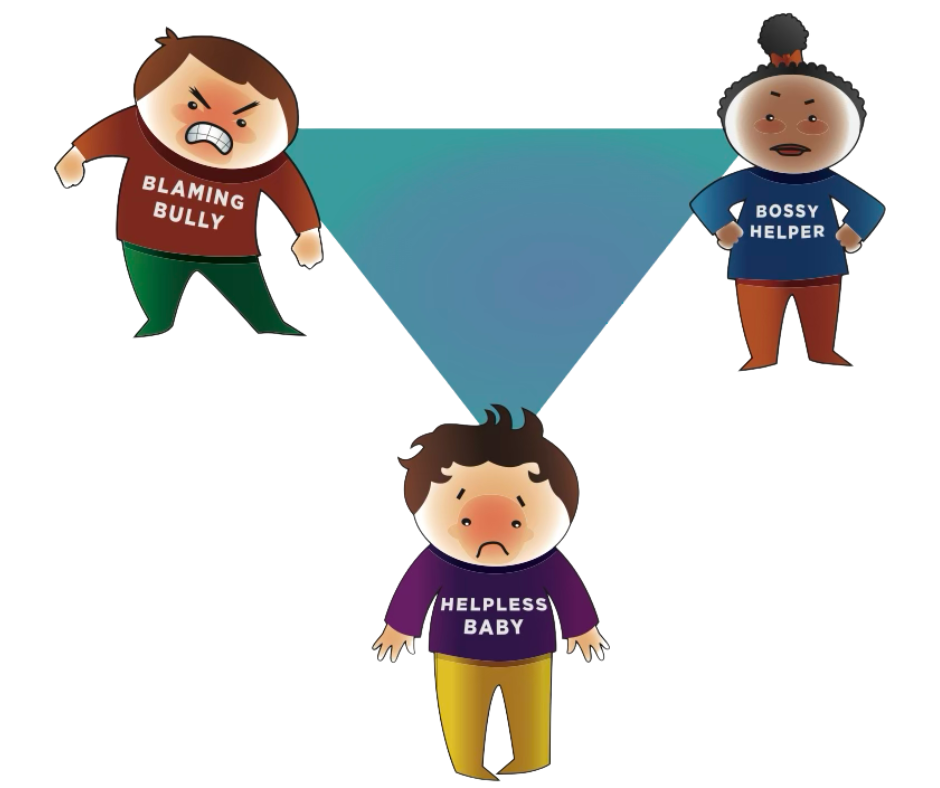
The Helpless Baby
The Helpless Baby often believes:
“I can’t.”
“It’s too hard.”
“Nothing will ever change.”
“Someone needs to rescue me.”
When life hurts, they tend to withdraw, avoid responsibility, procrastinate, or shut down emotionally.
The Bossy Helper
The Bossy Helper believes:
“If I don’t do it, nobody will.”
“I need to fix this.”
“I need to make everyone okay.”
This person often carries responsibilities God never assigned them.
They over-function, over-give, over-manage, and eventually become exhausted and resentful.
If I’m honest, this is probably the position I’ve spent the most time in throughout my own healing journey.
The Bossy Helper often looks responsible.
But underneath the responsibility is fear.
Fear that things will fall apart if they stop carrying everything.
The Blaming Bully
The Blaming Bully believes:
“This is your fault.”
“If everyone else would change, I’d be fine.”
When hurting, they often become critical, defensive, reactive, judgmental, or controlling.
What many people don’t realize is that anger often protects deeper grief.
Underneath the criticism is usually pain.
The truth is that all three positions are attempts to protect ourselves from hurt.
But survival strategies are not the same thing as healing.
What God Invites Us Into Instead
God doesn’t simply expose unhealthy patterns.
He invites us into something better.
The Happy Kid.
The Caring Friend.
The Respectful Leader.
The Happy Kid is secure, teachable, connected to reality, and connected to God.
The Caring Friend loves others without rescuing them.
Supports without controlling.
Shows compassion without carrying responsibilities that belong to someone else.
The Respectful Leader speaks truth with courage, humility, and grace.
They don’t avoid conflict.
But they don’t attack either.
These positions allow us to live from truth rather than fear.
Responsibility rather than control.
Connection rather than shame.
If you’ve never identified your own go-to position on the Unhappy Kid Triangle, I encourage you to take my free quiz:
Discover Your Go-To Position on the Unhappy Kid Triangle
I’ve watched this simple tool create tremendous awareness for individuals, couples, and families because you can’t change what you don’t recognize.
Awareness is often where healing begins.
Conviction Is Not Shame
One of my favorite moments in Nehemiah 8 comes after the people begin weeping.
Nehemiah tells them:
“The joy of the Lord is your strength.”
Notice what he doesn’t say…
He doesn’t tell them to stop feeling.
He doesn’t shame their grief.
He doesn’t tell them to move on.
Instead, he reminds them that grief is not the end of the story.
This is where many people confuse conviction and shame.
Conviction says:
“I was wrong.”
Shame says:
“I am wrong.”
Conviction draws us toward God.
Shame causes us to hide from Him.
Conviction leads to repentance.
Shame leads to isolation.
God reveals what needs healing not to condemn us, but to restore us.
The tears in Nehemiah 8 were evidence of God’s grace.
A hard heart doesn’t weep.
A heart being softened by God does.
The Crisis Was Never the Finish Line
Friend, maybe you’ve survived something difficult.
Maybe you’ve rebuilt parts of your life.
Maybe the immediate crisis has passed.
But perhaps God is inviting you into deeper healing.
Perhaps there are losses that still need grieving.
Core beliefs that still need examining.
Patterns that still need surrendering.
Wounds that still need bringing into the light.
The wall may be rebuilt.
But God’s work is not finished.
In fact, His deepest work may just be beginning.
Because God doesn’t simply rebuild circumstances.
He rebuilds hearts.
And that’s very good news.
Listen to the Companion Podcast Episode
If this message resonates with you, I invite you to listen to the companion podcast episode:
Episode 119: After the Crisis: The Heart Work Most People Skip
In this episode, I dive deeper into Nehemiah 8, grief and lament, the Unhappy Kid Triangle, conviction versus shame, and practical steps you can take to cooperate with God’s healing process.
🎧 Listen below:
Ready to Take the Next Step?
If you’re ready to move beyond survival and begin experiencing deeper healing, here are a few resources that may help:
Take the Free Quiz
Discover Your Go-To Position on the Unhappy Kid Triangle
Identify the unhealthy pattern you naturally move toward when life becomes difficult and learn how to move toward healthier responses.
Download Free Resources
Visit my website to access free biblical resources designed to support your healing journey, including:
- The Healing Mirror
- Legacy of Faith Guided Journal
- Letter of Release Guide
- You’re Not Alone Teen Devotional and Parent Guide
Counseling & Family Coaching
If you’re looking for personalized support, I offer biblical counseling and family coaching for individuals, couples, teens, and families navigating difficult seasons.
Learn more about my services and book a session
Renew & Restore Women’s Healing Retreats
If you feel God inviting you to step away from the noise and focus on your healing journey, I’d love for you to join us at one of our upcoming Renew & Restore Women’s Healing Retreats.
These retreats provide space to process, reflect, heal, and reconnect with God in a deeper way alongside other women pursuing wholeness and restoration.
Explore My Retreats and Register
Explore the Happy Kid Toolkit
The Happy Kid Toolkit provides practical biblical tools to help individuals and families identify unhealthy relational patterns, renew their minds, improve communication, and build healthier relationships.
Because healing is possible.
Transformation is possible.
Generational cycles can be broken.
And with God’s help, you really can build a healthier, happier family.
With you in this journey,
