

When Someone Else’s Voice Becomes Louder Than God’s

Reclaiming Your Voice, Grieving Your Losses, and Learning to Trust God Again
Have you ever heard someone’s voice in your head long after they were gone?
Maybe it was a parent.
A pastor.
A youth paster or leader.
A former spouse.
A teacher.
A friend.
Maybe it was someone who held influence, authority, or significance in your life.
And although years have passed, their words still shape your decisions.
You hear their criticism.
Their disappointment.
Their warnings.
Their expectations.
Their judgments.
And before you realize it, you’re no longer asking:
“What is God saying?”
You’re asking:
“What would they think?”
The photo above was taken while I was hiking the trail to Huayna Picchu in Peru.
As I look back on that image now, it reminds me of something I’ve been learning over the past several years.
Healing often feels like walking a narrow path where you can only see the next few steps ahead.
You don’t have all the answers.
You don’t know exactly what’s around the next bend.
But you keep moving forward, trusting that God is leading you.
Personally, I have experienced tremendous growth and healing since leaving a church where I endured significant spiritual abuse and coercive control.
To be honest, there are times when I hesitate to even talk about it because I don’t want to sound stuck in the past or consumed by what happened.
The truth is, God has done a beautiful work in my life.
I have forgiven.
I have healed.
I have grown.
But what continues to surprise me is how many men and women I now counsel who are walking through similar experiences.
Young adults.
Middle-aged adults.
Married couples.
Parents.
People who are trying to rebuild their relationship with God after spending years in environments where fear, control, shame, performance, or unhealthy authority distorted their understanding of Him.
Many of them are no longer sitting under those leaders.
Yet they still hear the voices.
The criticism.
The warnings.
The pressure.
The fear of getting it wrong.
The fear of disappointing people.
The fear of trusting their own God-given discernment.
And as I listen to their stories, I am reminded of something important:
One of the greatest losses people often experience is not the loss of a church, a relationship, or a season of life.
It is the loss of confidence in their God-given ability to hear, discern, and follow Christ.
This is especially true when spiritual authority becomes so elevated that we begin trusting human voices more than God’s voice.
And that is what this article is about.
How we lose our voice.
How we lose sight of our identity.
How we grieve what was taken.
And how, by God’s grace, we learn to trust our Good Shepherd again.
How We Slowly Lose Our Voice
Most people don’t wake up one day and decide to stop trusting God.
The process is often much more subtle.
It usually begins with a deep desire to belong.
God created us for connection, community, and relationship. Those desires are not wrong.
The problem begins when belonging becomes dependent upon approval.
Maybe you grew up in a family where disagreement wasn’t welcome.
Maybe love felt conditional.
Maybe mistakes were met with criticism instead of grace.
Maybe you learned early that keeping everyone happy felt safer than being honest.
Without realizing it, many people begin measuring their worth through the reactions of others.
Their peace becomes dependent upon approval.
Their confidence becomes dependent upon praise.
Their identity becomes dependent upon performance.
Over time, they stop asking:
“What does God say?”
And begin asking:
“What will make everyone else happy?”
This is often the foundation of people-pleasing and codependency.
When Spiritual Authority Becomes Spiritual Control
The Bible speaks clearly about authority.
God created authority.
Healthy authority protects.
Healthy authority serves.
Healthy authority points people toward Christ.
But unhealthy authority creates dependence on the leader rather than dependence on God.
One of the most damaging messages a believer can receive is:
“You can’t trust yourself to hear God.”
Now, let’s be clear.
We all need wise counsel.
We all need accountability.
We all need community.
But none of those things were ever meant to replace the Holy Spirit.
Jesus said:
“My sheep hear my voice, and I know them, and they follow me.” — John 10:27
Notice what Jesus does not say.
He doesn’t say His sheep hear the pastor’s voice.
Or the elder’s voice.
Or the ministry leader’s voice.
He says His sheep hear His voice.
This isn’t a call toward spiritual independence.
It’s a call toward spiritual intimacy.
God desires a personal relationship with His children.
The Question We All Need to Ask
One of the most fascinating questions in Scripture appears in Genesis 3.
After Adam and Eve sinned, they hid from God.
When God confronted Adam, He asked:
“Who told you that you were naked?” — Genesis 3:11
What an incredible question.
God immediately traced Adam’s behavior back to a voice.
A message.
A belief.
A story.
I think many of us need to ask ourselves that same question.
Who told you that you weren’t enough?
Who told you that you were ‘too much’?
Who told you that you were selfish?
Who told you that you were rebellious when gently confronting church leadership about their sinful behaviors and or prideful attitudes?
Who told you that your value depends upon performance?
Who told you that you needed to act a certain way, vote for a certain candidate, or belong to the ‘right’ political party so that you wouldn’t be ostracized or looked down upon by church leadership?
Who told you that making mistakes makes you a failure?
Who told you that you can’t trust God’s leading in your life?
Who told you that disappointing people means you’re doing something wrong?
Because not every voice in your head belongs there.
Some voices are echoes from old wounds.
Some are remnants of fear.
Some are messages from unhealthy systems that became deeply rooted beliefs.
And some need to be challenged by the truth of God’s Word.
Why Grief Is Part of Healing
One of the biggest mistakes people make when healing from church hurt, spiritual manipulation, family dysfunction, or relational trauma is trying to skip grief.
They want healing.
They want freedom.
They want forgiveness.
But they don’t want to acknowledge the losses.
The truth is that healing often begins when we honestly acknowledge what was taken.
Maybe you lost confidence.
Maybe you lost trust.
Maybe you lost years trying to earn approval.
Maybe you lost friendships.
Maybe you lost peace.
Maybe you lost your sense of identity.
Scripture never teaches us to bypass grief.
In fact, much of the Psalms are expressions of grief, lament, confusion, and honest conversation with God.
Ecclesiastes reminds us:
“There is a time to weep and a time to laugh, a time to mourn and a time to dance.” — Ecclesiastes 3:4
Grief is not bitterness.
Grief is honesty.
And honesty is often where healing begins.
The Unhappy Kid Triangle and Losing Your Voice
One reason many people remain stuck is because they unknowingly live from the positions of the Unhappy Kid Triangle.
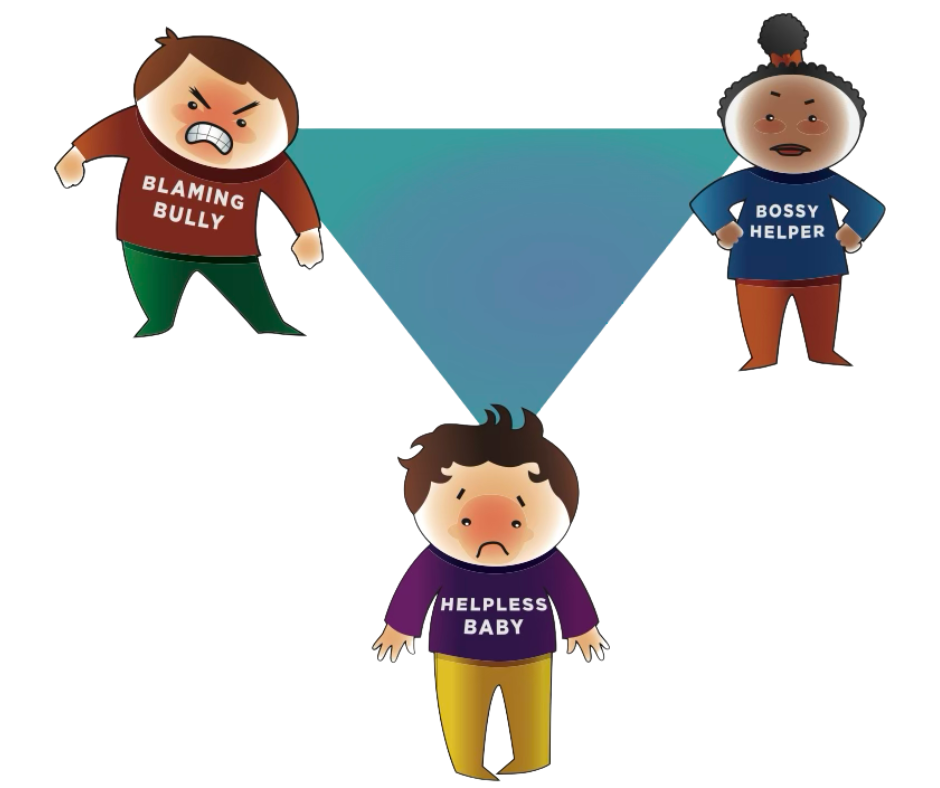
The Helpless Baby
The Helpless Baby believes:
“I can’t trust myself.”
“Someone tell me what to do.”
“Someone else needs to make this decision.”
This often shows up in people who constantly seek reassurance because they fear making mistakes.
The Bossy Helper
The Bossy Helper believes:
“I know what’s best for everyone else.”
This role often appears in controlling family systems, unhealthy leadership structures, and codependent relationships.
Instead of empowering others, it attempts to manage them.
The Blaming Bully
The Blaming Bully believes:
“If you disagree with me, you’re wrong.”
“If you don’t do things my way, you’re the problem.”
This position often uses shame, criticism, intimidation, or guilt to maintain control.
None of these positions produce freedom.
They produce fear.
Moving Toward the Happy Kid Triangle
Healing happens when we begin moving toward healthier ways of relating.
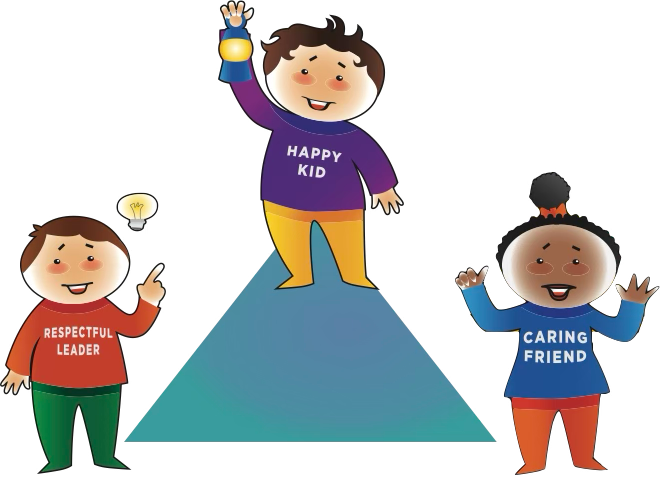
The Happy Kid
The Happy Kid knows:
“I am loved by God.”
“I don’t have to earn my worth.”
“I can make mistakes and still be accepted.”
The Caring Friend
The Caring Friend walks alongside others without controlling them.
They support.
Encourage.
Listen.
Pray.
But they don’t take responsibility for someone else’s choices.
The Respectful Leader
The Respectful Leader seeks wisdom while taking responsibility for their own decisions before God.
They listen to counsel.
They value community.
But they do not surrender personal responsibility for their own life.
Learning to Trust God Again
For many people, healing is not ultimately about learning to trust themselves.
It’s about learning to trust God again.
Romans 8:14 tells us: “For all who are led by the Spirit of God are sons of God.”
James 1:5 reminds us: “If any of you lacks wisdom, let him ask God.”
Psalm 32:8 says: “I will instruct you and teach you in the way you should go.”
Notice the pattern.
God guides.
God leads.
God instructs.
God teaches.
He is not playing hide-and-seek with His will for your life.
He is not waiting for you to fail.
He is not standing over you hoping you’ll make the wrong decision.
He is a Good Shepherd.
And Good Shepherds guide their sheep.
Listen to the Companion Podcast Series
If this topic resonates with you, I encourage you to listen to this three-part healing series, where we explore the journey from reclaiming your voice, to rebuilding your identity, to learning how to trust again.
Episode 120: Who Told You That? Reclaiming Your Voice, Grieving Your Losses, and Learning to Trust God Again
In this episode, I unpack how unhealthy family systems, people-pleasing, codependency, church hurt, spiritual manipulation, and unhealthy authority structures can cause us to lose confidence in our God-given ability to hear and follow Christ. We explore the Unhappy Kid Triangle, grieving what was lost, and beginning the process of reclaiming our voice.
Episode 121: Rebuilding Your Identity After Church Hurt, Spiritual Control, and People-Pleasing
Once we begin reclaiming our voice, we often discover that we have forgotten who we truly are. In this episode, we explore how our identity can become shaped by the expectations, labels, judgments, and approval of others—and how God lovingly restores our identity as His beloved sons and daughters.
Episode 122: Learning to Trust Yourself, Others, and God Again
After reclaiming your voice and rebuilding your identity, the next step is learning how to trust again. In this episode, we talk about healing from betrayal, disappointment, church hurt, and broken relationships. We explore what healthy trust actually looks like, how to discern safe people, and how to anchor our trust ultimately in God rather than in human beings.
This Three-Part Series Will Help You:
✓ Reclaim your voice after unhealthy relationships or spiritual control
✓ Identify and challenge false beliefs that have shaped your identity
✓ Understand the difference between healthy authority and spiritual manipulation
✓ Grieve the losses associated with church hurt, relational wounds, and betrayal
✓ Move from the Unhappy Kid Triangle toward the Happy Kid Triangle
✓ Rebuild trust in your God-given discernment and the leading of the Holy Spirit
✓ Grow in confidence, freedom, and emotional maturity as you follow Christ
Whether your wounds came from a church, a family system, a relationship, or another authority figure, my prayer is that this series helps you experience the freedom, healing, and restoration that Christ offers to each of us. ❤️
It’s a great companion to this post and will give you even more encouragement and practical steps as you begin walking in renewal.
Ready to Take the Next Step?
If you’re struggling with church hurt, spiritual abuse, people-pleasing, codependency, unhealthy family dynamics, or recovering your identity in Christ, I would be honored to walk alongside you.
Resources:
✓ Take the Free Unhappy Kid Triangle Quiz
✓ Explore the Happy Kid Toolkit
✓ Download Free Healing Resources
✓ Schedule Biblical Counseling or Coaching
✓ Learn More About Upcoming Renew & Restore Healing Retreats
Friend, you do not have to spend the rest of your life living under the weight of someone else’s opinions.
Christ came to set you free.
And freedom begins when His voice becomes louder than every other voice you’ve been carrying.
“It is for freedom that Christ has set us free.” — Galatians 5:1
With love and gratitude,
