

Who Am I Without the Roles I’ve Always Played? Rebuilding Identity in Christ After Trauma, Loss, and Control

A few years ago, I was standing in the crystal-clear waters of Baby Beach in Aruba when something caught my attention.
It wasn’t the turquoise water.
It wasn’t the soft white sand.
It was a weathered piece of driftwood stretching out over the shoreline.
As I stood there looking at it, I found myself wondering about its story.
That tree hadn’t started there.
At some point, it had been rooted somewhere else.
Alive.
Growing.
Strong.
But over time, storms came.
Winds blew.
Currents carried it.
The elements shaped it.
What once looked one way now looked completely different.
And yet, despite everything it had endured, there was still beauty in it.
I remember standing there thinking about how much that driftwood reminded me of people.
It reminded me of me.
It reminded me of so many women I sit across from in counseling every week.
Women who have been shaped by childhood wounds, difficult marriages, family dysfunction, church hurt, betrayal, disappointment, loss, trauma, and responsibilities they were never meant to carry alone.
Women who have spent years adapting, surviving, and becoming whatever they needed to become in order to make it through.
The helper.
The caretaker.
The peacemaker (aka the peacefaker)
The strong one.
The responsible one.
The fixer.
The achiever.
And somewhere along the way, many of us forget that those roles were never meant to become our identity.
As I looked at that driftwood, I was reminded of something the prophet Isaiah wrote:
“But now, this is what the Lord says—He who created you, Jacob, He who formed you, Israel: ‘Do not fear, for I have redeemed you; I have called you by name; you are Mine.'” (Isaiah 43:1)
Before life shaped us, God formed us.
Before the wounds.
Before the disappointments.
Before the labels.
Before the survival strategies.
Before the roles.
God knew who we were.
The world may have told us who we needed to become in order to be loved, accepted, protected, or valued.
But God calls us by name.
Not by our wounds.
Not by our performance.
Not by our failures.
Not by our fears.
By name.
There comes a point in many healing journeys when the question is no longer:
“What happened to me?”
Instead, the question becomes:
“Who am I now?”
Who am I apart from the expectations?
Who am I apart from the performance?
Who am I apart from the role I’ve always played?
Who am I underneath all the coping mechanisms, responsibilities, and survival strategies I’ve carried for so many years?
That question can feel unsettling.
But I’ve discovered it can also become the doorway to profound healing.
Because healing isn’t just about recovering from what happened to us.
It’s about rediscovering who God created us to be.
Part of a Three-Episode Healing Series
This blog is part of a special three-part podcast series exploring what many people experience after trauma, church hurt, family dysfunction, betrayal, loss, unhealthy relationships, and seasons of deep disappointment.
In Episode 120, we explored what it means to reclaim your voice after years of silence, fear, control, or unhealthy power dynamics.
In Episode 121, we explore how to rebuild your identity when survival has become your normal way of living.
And in Episode 122, we’ll talk about learning to trust yourself, others, and God again after trust has been broken.
I encourage you to listen to all three episodes together because they build upon one another and reflect the natural progression of healing:
Reclaim your voice.
Rediscover your identity.
Learn to trust again.
(you can find and listen to all three episodes at the bottom of this blog post)
Survival Is Not Identity
One of the most important truths I have learned in my own healing journey—and through years of biblical counseling—is this:
Survival strategies are not identity.
Many of us developed coping mechanisms as children long before we understood what we were doing.
If conflict felt dangerous, we learned to keep the peace.
If love felt conditional, we learned to perform.
If chaos surrounded us, we learned to control.
If we felt unseen, we learned to achieve.
If we felt responsible for everyone else’s emotions, we learned to rescue and fix.
These patterns often helped us survive.
But what helps us survive isn’t always what helps us thrive.
Somewhere along the way, many of us stopped saying:
“This is how I learned to cope.”
And started believing:
“This is who I am.”
Those are not the same thing.
The False Identities We Carry
Trauma, dysfunction, and unhealthy systems often assign identities that God never intended for us to carry.
Perhaps you’ve spent years believing:
I’m the strong one.
I’m the responsible one.
I’m the fixer.
I’m the caretaker.
I’m the problem.
I’m the failure.
I’m the black sheep.
I’m the one who always gets overlooked.
I’m the one who has to hold everything together.
These labels become familiar.
And sometimes familiar feels safer than freedom.
Because freedom requires us to release stories we’ve believed about ourselves for years.
But friend, your role is not your identity.
Your wound is not your identity.
Your coping mechanism is not your identity.
And your past is not your identity.
What the Happy Kid Toolkit Reveals
One reason so many people connect deeply with the Happy Kid Toolkit is because it helps expose the difference between identity and survival.
The Unhappy Kid Triangle consists of three common coping roles:
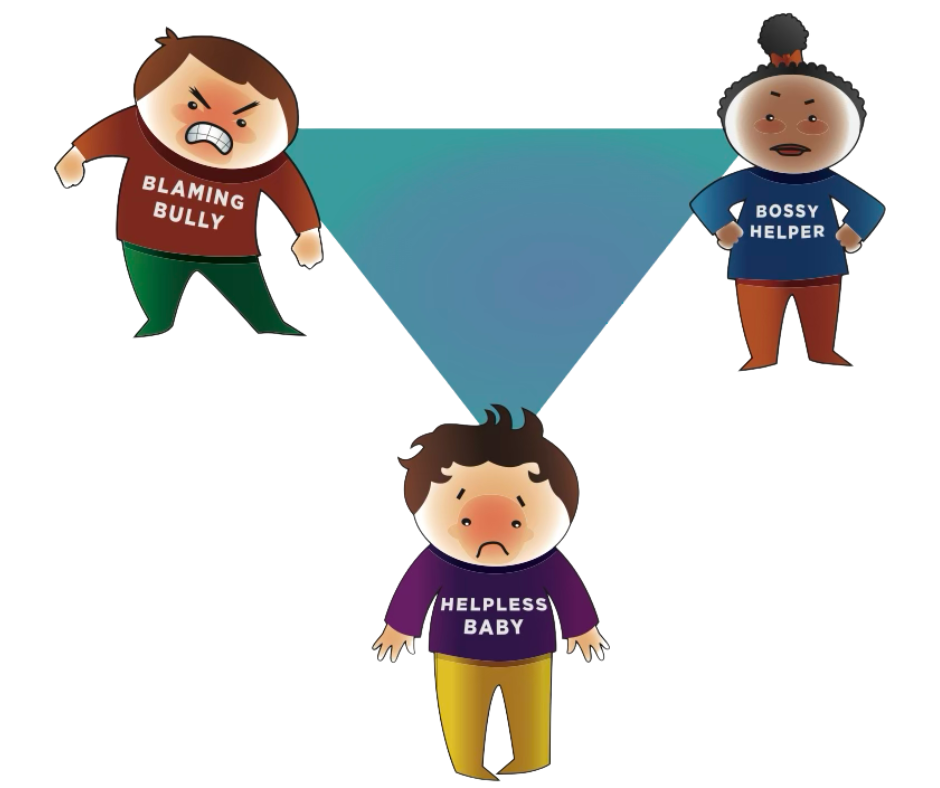
The Bossy Helper
The Bossy Helper often believes:
“I matter when I’m needed.”
- They rescue.
- Fix.
- Over-function.
- Carry responsibilities that belong to others.
But underneath that behavior is often a deeper fear:
“If I stop helping, will I still be valuable?”
The Helpless Baby
The Helpless Baby often believes:
“I matter when someone takes care of me.”
- They struggle to trust their own capabilities.
- Avoid responsibility.
- Wait for rescue.
Yet underneath that behavior is often fear:
“What if I can’t do this on my own?”
The Blaming Bully
The Blaming Bully often believes:
“I matter when I’m in control.”
“I can’t get hurt if I’m in control and powerful.”
- They criticize.
- Defend.
- Attack.
- Dominate conversations or relationships.
But beneath that behavior is often fear:
“What if I’m powerless?”
“What if I really am a bad kid/person?”
None of these roles represent who you are.
They simply reveal how you’ve learned to survive.
And because they were learned, they can also be unlearned.
Trauma Distorts Identity
One of trauma’s greatest dangers is that it doesn’t simply wound us.
It teaches us.
It teaches lessons that often become core beliefs.
Abuse may teach:
I am unsafe.
Rejection may teach:
I am unwanted.
Neglect may teach:
I don’t matter.
Control may teach:
My voice doesn’t matter.
Shame may teach:
Something is wrong with me.
But just because a wound taught you something does not mean it is true.
Many of the beliefs driving our lives were formed during seasons of pain.
Healing often begins when we bring those beliefs into the light and compare them to God’s truth.
What Does God Say About You?
Before Adam and Eve ever accomplished anything, God established their identity.
Before they worked.
Before they performed.
Before they produced.
Before they proved themselves.
They were image bearers.
Created intentionally.
Known completely.
Loved deeply.
Valued intrinsically.
Genesis reminds us that our identity begins with who God is—not with what we do.
Ephesians 2:10 says:
“For we are His workmanship, created in Christ Jesus for good works.”
Notice that the work flows from the identity.
The identity does not flow from the work.
You do not earn your value.
You already possess value because you belong to Him.
Questions for Reflection
Take a few moments this week and prayerfully reflect on these questions:
What do I believe about myself when I fail?
What do I believe about myself when someone is disappointed in me?
What do I believe about myself when I’m not productive?
What do I believe about myself when nobody needs me?
What do I believe about myself when I’m not helping anyone?
Your answers may reveal hidden beliefs that God wants to heal.
You Are More Than What Happened to You
One of the most freeing realizations in my own life was understanding that God was not asking me to become someone else.
He was inviting me to become who He created me to be all along.
Not the performing version.
Not the proving version.
Not the fearful version.
Not the survival version.
The surrendered version.
The healed version.
The daughter He created from the beginning.
Friend, your identity is not your trauma.
Your identity is not your role.
Your identity is not your performance.
Your identity is not your past.
Your identity is found in Christ.
And that changes everything.
🎙️ Follow the Entire Healing Series
If this topic resonates with you, I strongly encourage you to listen to all three episodes in this special healing series. While each episode can stand alone, together they walk through a powerful journey that many people experience after trauma, church hurt, family dysfunction, betrayal, loss, unhealthy relationships, and seasons of deep disappointment.
Episode 120: Who Told You That? Reclaiming Your Voice, Grieving Your Losses, and Learning to Trust God Again
In this episode, we explore what happens when fear, control, people-pleasing, unhealthy authority structures, codependency, or painful experiences cause us to lose confidence in our own voice. Together, we’ll discuss spiritual abuse, grief, family systems, and how God begins restoring what was silenced.
Episode 121: When You Don’t Know Who You Are Anymore: Rebuilding Identity After Trauma, Loss, and Control
In this episode, we examine the difference between identity and survival strategies. You’ll learn how trauma, family dysfunction, church hurt, perfectionism, people-pleasing, and unhealthy coping mechanisms can shape false identities—and how Scripture invites us to rediscover who God says we are.
Episode 122: Learning to Trust Again: Yourself, Others, and God After Betrayal, Trauma, and Disappointment
In the final episode of this series, we talk about one of the hardest parts of healing: learning to trust again. We’ll explore what healthy trust actually looks like, why trust is different from blind faith, how trauma impacts our ability to trust, and how God gently restores confidence in ourselves, others, and ultimately in Him.
The Healing Journey
Episode 120: Reclaim Your Voice
Episode 121: Rebuild Your Identity
Episode 122: Learn to Trust Again
Because healing isn’t just about recovering from what happened to you.
It’s about becoming who God created you to be.
Ready for Deeper Support?
If this message resonated with you, I want to encourage you to remember something:
Healing rarely happens in isolation.
God designed us to heal in relationship—with Him and with safe, healthy people who can help us identify blind spots, process pain, renew our minds, and walk in truth.
If you’re navigating identity confusion, childhood wounds, church hurt, relationship struggles, anxiety, codependency, people-pleasing, unhealthy family dynamics, grief, betrayal, or generational patterns that keep showing up in your life, I’d be honored to walk alongside you.
Through biblical counseling and faith-based coaching, I help individuals, couples, teens, and families move from survival patterns toward lasting transformation through God’s Word, practical tools, and the guidance of the Holy Spirit.
Counseling & Coaching
Whether you’re feeling stuck, overwhelmed, disconnected, or simply ready to go deeper in your healing journey, support is available.
Learn more about counseling and coaching opportunities here:
Biblical Counseling & Family Coaching
Renew & Restore Women’s Healing Retreats
One of the most beautiful things I witness at every retreat is what happens when women finally step away from the noise.
The responsibilities.
The distractions.
The pressure to keep holding everything together.
When we create intentional space to slow down, process, pray, reflect, and listen for God’s voice, healing often begins in ways that surprise us.
Our Renew & Restore Women’s Healing Retreats are designed to help women move from surviving to thriving through biblical teaching, guided reflection, practical tools, community, prayer, and personal healing work.
Upcoming retreat dates and locations are announced throughout the year.
To view current retreat opportunities and join the interest list for future retreats, visit:
Discover Your Go-To Position
One of the most powerful insights you can gain is understanding how you respond when life becomes stressful, overwhelming, disappointing, or painful.
Do you tend to:
• Collapse into the Helpless Baby?
• Over-function as the Bossy Helper?
• Become critical, defensive, or controlling as the Blaming Bully?
These survival patterns affect our marriages, parenting, friendships, leadership, churches, and even our relationship with God.
The good news?
You don’t have to stay there.
Take my free quiz to discover your default position and learn how to move toward the healthy roles of the:
• Happy Kid
• Caring Friend
• Respectful Leader
Take the free quiz here:
Discover Your Go-To Position on the Unhappy Kid Triangle
Free Resources for Your Healing Journey
I’ve created a growing collection of free resources to help support you as you pursue emotional, relational, and spiritual healing.
Resources include:
• Legacy of Faith Guided Journal
• You’re Not Alone Teen Devotional
• Subscribe to My Weekly Email List
Friend, if there’s one thing I hope you take away from this message, it’s this:
You are not the role you’ve played.
You are not the wound you’ve carried.
You are not the lie you’ve believed.
You are not the survival strategy that helped you make it through.
You are a beloved son or daughter of God.
And the person He created you to be may be closer than you think.
“See what great love the Father has lavished on us, that we should be called children of God!” — 1 John 3:1
With all my love,
