

When the Outcome Isn’t Yours: 6 Practices for Trusting God in the Unresolved Places
What to do when you’ve prayed, obeyed, surrendered—and life still hasn’t changed
There are seasons when the hardest part of trusting God is not figuring out what to do.
You already did it.
You prayed.
You had the conversation.
You apologized.
You set the boundary.
You told the truth.
You asked for help.
You stopped rescuing.
You released the person.
You did what you genuinely believed God was asking you to do.
And yet…
the situation is still unresolved.
Your child is still struggling.
The relationship is still strained.
The prayer still has not been answered.
The person you hoped would change has not changed.
The door you thought would open is still closed.
You have done the faithful thing, but you do not have the outcome you hoped faithfulness would produce.
And this is where trust gets very real.
Because sometimes the hardest question is no longer:
“What should I do?”
It is:
“What do I do when I have done what is mine…and the rest is not mine?”
That is the tension we explore in Episode 124 of The Happy Family Coach Podcast, Part 2 of our Romans 8 series.
Romans 8 does not promise us a life without suffering, waiting, disappointment, or unanswered questions.
Instead, it teaches us how to live inside those places without interpreting them as evidence that God has abandoned us.
Paul tells us that creation groans.
We groan.
The Holy Spirit meets us in our weakness.
We wait with hope for what we cannot yet see.
God works redemptively even through things He never called good.
And ultimately, nothing can separate us from His love.
So if you are carrying something you cannot fix today, I want to give you six practical ways to live faithfully in the unresolved place.
Not six ways to make the outcome change.
Six ways to remain grounded in truth while you wait.
1. Separate What Hurts From What It Means
One of the first things we need to learn in painful seasons is that pain and interpretation are not the same thing.
Something can hurt deeply without the story you have attached to it being true.
FOR EXAMPLE:
The reality:
My adult child is making destructive choices.
The interpretation:
I failed as a mother.
Or:
The reality:
The relationship ended.
The interpretation:
I must have missed God.
Or:
The reality:
I prayed, and the answer has not come.
The interpretation:
God is not listening.
Or:
The reality:
Someone is angry about my boundary.
The interpretation:
I must have done something wrong.
Pain often makes us reach for explanations.
We want to understand why.
And when we cannot understand, our minds may create a conclusion.
But Romans 8 reminds us that suffering itself is not evidence of abandonment.
Paul does not say:
If God loves you, nothing painful will happen.
He says that suffering exists in this present world and that it does not get the final word.
So when something hurts, practice separating these two sentences:
What happened?
and
What have I decided it means?
Those answers may not be the same.
Try writing:
What I know:
My child is struggling.
What I am assuming:
This proves I failed.
Then ask: Does Scripture actually support that conclusion?
Often, it does not.
You are allowed to say:
“This hurts.”
without adding:
“Therefore God has abandoned me.”
You are allowed to say:
“I wish this were different.”
without adding:
“Therefore I must have done something wrong.”
Sometimes the first act of trust is simply refusing to turn pain into a verdict.
2. Move the Finish Line From Outcome to Obedience
This may be one of the most freeing practices I have been learning.
Many of us have a finish line that keeps moving.
You have the hard conversation.
But the other person is still upset.
So you think:
Maybe I need to explain it better.
You set the boundary.
They push back.
So you wonder:
Maybe I was too harsh.
You release your adult child to God.
They make another poor decision.
So you think:
Maybe I need to step back in.
You pray.
Nothing visibly changes.
So you wonder:
Maybe I am not praying enough.
Do you see what happens?
We make the outcome the measure of whether we were faithful.
And that means we can never rest until another human being responds the way we hoped.
That is an impossible burden.
So instead of asking:
Did I get the outcome I wanted?
Ask:
Was I faithful with what God gave me to do?
Did I tell the truth?
Did I love?
Did I listen?
Did I apologize where I was wrong?
Did I set the boundary I needed to set?
Did I pray?
Did I act with integrity?
Did I release what was not mine?
That is a different finish line.
And sometimes you may arrive there while the situation remains completely unresolved.
You can say:
“I was faithful today.”
even when:
They are still angry.
Your child is still struggling.
The answer is still no.
The future is still unclear.
Faithfulness and desired outcomes are not the same thing.
We are responsible for obedience.
God remains responsible for outcomes.
3. Ask, “What Is Actually Mine Today?”
When a situation is painful, we can begin carrying things that were never ours.
- Their emotions.
- Their choices.
- Their timeline.
- Their repentance.
- Their recovery.
- Their relationship with God.
- Their consequences.
- Their opinion of us.
- Their interpretation of our boundary.
- Their willingness to forgive.
- Their willingness to change.
That is a lot to carry.
So when you feel overwhelmed, ask:
What is actually mine today?
Maybe mine is:
- Tell the truth.
- Pray.
- Keep the boundary.
- Show kindness.
- Make dinner.
- Go to work.
- Answer the email.
- Take care of my body.
- Keep the appointment.
- Apologize.
- Wait.
- Rest.
- Maybe what is not mine is:
- Making them understand.
- Making them repent.
- Making them forgive me.
- Making my grown child choose wisely.
- Making someone see my intentions.
- Making the timing happen faster.
- Making an outcome appear.
This is where surrender becomes practical.
Surrender is not:
“I do not care anymore.”
Surrender is:
“I care very deeply, but I recognize the limits of my responsibility.”
It is saying:
Father, I will carry what You have given me.
But I will stop carrying what belongs to You.
4. Let Yourself Groan Without Calling It Unbelief
Romans 8 is extraordinarily honest about suffering.
Paul describes creation as groaning.
Then he says we groan too.
And later he tells us that the Spirit meets us in our weakness.
There is no requirement in Romans 8 that faithful Christians pretend everything is fine.
You can trust God and still be sad.
You can believe Scripture and still be disappointed.
You can worship and still grieve.
You can love God and still say:
“I do not understand.”
Some of us rush ourselves through grief because we think every painful experience must immediately become a lesson.
We want to get to:
Here is what God taught me!
Sometimes you are not there yet.
Sometimes today is simply:
This hurts.
That is not a spiritual failure.
Jesus Himself wept.
The Psalms are filled with lament.
Biblical faith is not emotional denial.
It is bringing our actual hearts before God.
So give yourself permission to say:
Father, I hate this.
I wish it were different.
I miss them.
I am tired.
I am scared.
I do not understand.
I thought You were going to answer differently.
I do not know what to do.
That is prayer too.
Sometimes groaning is an act of faith because you are choosing to bring your pain toward God rather than away from Him.
5. When You Don’t Know What to Pray, Stop Performing
Romans 8:26 gives us one of the most tender promises in Scripture:
The Holy Spirit helps us in our weakness.
Paul even acknowledges that sometimes we do not know what to pray.
That is incredibly freeing.
Because prayer can become another place where we perform.
We think we need the right words.
The right Scripture.
The right amount of faith.
The right emotional posture.
But sometimes you have prayed every prayer you know.
Sometimes you genuinely do not know what the “right” outcome is anymore.
Maybe someone you love is making destructive choices.
Do you pray that God shields them from consequences?
Or that the consequences wake them up?
Maybe you have a painful relationship.
Do you keep pursuing reconciliation?
Do you step back?
Maybe you are standing between two options and neither one feels easy.
And your prayer becomes:
“Holy Spirit, help me. I don’t know.”
That is enough.
Sometimes your prayer is:
Jesus.
Sometimes your prayer is tears.
Sometimes it is silence.
Sometimes it is sitting with your Bible open and not being able to read another sentence.
God is not intimidated by your inability to formulate the perfect prayer.
Your weakness does not repel Him.
He meets you there.
6. Look for Redemption Without Calling the Pain Good
Romans 8:28 is quoted often:
“God works all things together for good for those who love Him and are called according to His purpose.“
But we need to handle this verse carefully.
Paul does not say:
Everything that happens is good.
It is not.
Abuse is not good.
Betrayal is not good.
Addiction is not good.
Death is not good.
Abandonment is not good.
Spiritual abuse is not good.
Sin is not good.
We never have to call evil good in order to trust God.
What Romans 8 gives us is something much more powerful:
Nothing is beyond the redemptive reach of God.
God can redeem what He never called good.
And the following verse helps us understand what “good” ultimately means.
Paul talks about being conformed to the image of Christ.
We tend to define good as:
Comfortable.
Easy.
Successful.
Resolved.
The ending I wanted.
God often defines good as:
Christlikeness.
So alongside:
“God, please change this,”
we can begin asking:
“Father, what are You forming in me here?”
Maybe He is forming courage.
Maybe discernment.
Maybe patience.
Maybe healthy boundaries.
Maybe humility.
Maybe dependence.
Maybe the ability to let someone else be responsible for their own life.
Maybe a deeper identity that no longer rises and falls with other people’s approval.
Maybe compassion.
Maybe endurance.
Maybe freedom from the illusion that everything depends on you.
None of those things make the pain good.
They reveal the Redeemer who refuses to waste it.
A Practical Exercise: The Mine / Not Mine List
If you are carrying an unresolved situation today, take a piece of paper and draw a line down the middle.
On the left write:
MINE
On the right write:
NOT MINE
Then begin filling it in.
Mine:
My words.
My choices.
My attitude.
My repentance.
My boundaries.
My obedience.
My prayer.
My willingness to forgive.
My willingness to seek wise counsel.
My stewardship of today.
My next faithful step.
Not Mine:
Their choices.
Their response.
Their emotions.
Their willingness to forgive.
Their repentance.
Their recovery.
Their timeline.
Their opinion of me.
Their relationship with God.
The final outcome.
Then look at the right-hand column.
And pray:
Father, I release these back to You.
You may have to do this more than once.
You may have to do it every morning for a season.
Surrender is sometimes not one dramatic moment.
Sometimes it is returning the same thing to God over and over until your hands slowly learn to stay open.
Another Question: Am I Waiting or Am I Monitoring?
There is a difference.
Waiting says:
I have entrusted this to God, and I am living faithfully today.
Monitoring says:
Has it changed yet?
What are they doing?
Did they respond?
Did they read the message?
Are they sorry yet?
Has God fixed it yet?
Did the door open?
Did something happen?
Monitoring can look like waiting from the outside.
But internally, it is still control.
Sometimes surrender means we stop checking.
We stop measuring.
We stop looking for daily evidence that God is doing what we asked.
And we begin living again.
That may mean enjoying dinner.
Going for the walk.
Planning something fun.
Sleeping.
Laughing.
Being present with the people who are actually in front of us.
Unresolved does not have to mean all-consuming.
You can carry grief without allowing grief to become your entire identity.
You can love a prodigal without making their choices the center of every day.
You can wait for God without putting your whole life on hold.
What Biblical Hope Actually Sounds Like
Hope is not:
“I know this will turn out exactly the way I want.”
Sometimes we do not know that.
Biblical hope sounds more like:
I do not know how this ends.
But I know who God is.
I do not know when this will change.
But I know who God is.
I do not understand why this happened.
But I know who God is.
I do not know what next year looks like.
But I know who God is.
Sometimes we want God to give us a map.
And He gives us Himself.
That can feel harder.
Especially for those of us who use information or control to feel safe.
But perhaps the invitation is not:
“Know everything.”
It is:
“Know Me.”
Seven Questions for the Unresolved Place
If you are walking through a season of waiting, grief, uncertainty, or surrender, journal through these slowly:
- What hurts right now—and what have I decided that pain means?
- Am I measuring my faithfulness by an outcome I cannot control?
- What is actually mine to carry today?
- What have I taken responsibility for that belongs to another person—or to God?
- Where do I need permission to grieve instead of rushing myself toward a lesson?
- What do I genuinely not know how to pray about?
- What might God be forming in me even while the circumstances remain unresolved?
And then ask the question I keep coming back to:
What is the next faithful thing?
Not the whole plan.
Just the next thing.
A Prayer for the Unresolved Places
Father,
You know exactly what I am carrying.
You know what I hoped would happen.
You know what I have prayed.
You know what I wish I could change.
And You know the places where I am tired.
Help me separate what hurts from the story I have attached to it.
Where I have interpreted suffering as abandonment, remind me that You are still here.
Where I have made myself responsible for another person’s choices, help me release them.
Where I have measured faithfulness by outcomes I cannot control, teach me a better finish line.
Show me what belongs to me today.
And give me the courage to leave the rest with You.
Teach me how to grieve without losing hope.
Teach me how to wait without monitoring.
Teach me how to surrender without becoming numb.
And when I do not know what to pray, Holy Spirit, help me in my weakness.
Father, redeem what You never called good.
Form Christ in me.
Give me wisdom.
Courage.
Humility.
Discernment.
Patience.
And trust.
I do not need to see the entire road today.
Help me take the next faithful step.
And when I am tempted to believe You have left me because this still hurts, remind me of Romans 8.
Nothing can separate me from Your love in Christ Jesus.
Not this.
Not today.
Not tomorrow.
Nothing.
In Jesus’ name,
Amen.
A Free Tool to Help You Begin
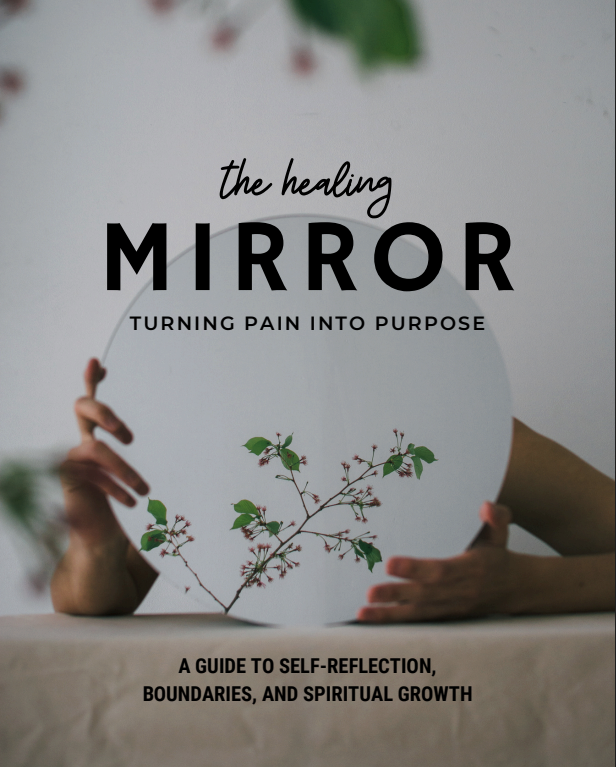
If you want to go deeper in identifying the lies and rewriting your family’s script, grab my free resource: The Healing Mirror eBook.
? Click here to download the Healing Mirror
It will help you reflect on the stories you’ve believed, replace them with God’s truth, and begin the journey of walking in freedom.
Listen to Episode 124
This article is the practical companion to Episode 124 of The Happy Family Coach Podcast: “When You Know the Truth but Life Still Hurts, Part 2: Suffering, Weakness, Hope, and the Love That Will Not Let You Go.”
In the episode, we walk through Romans 8:18–39 and talk more deeply about suffering, groaning, unanswered prayer, surrender, moving the finish line from outcome to obedience, what Romans 8:28 really means, and the promise that nothing can separate us from the love of God in Christ.
You can listen to the full episode using the podcast player below.
And if you missed Part 1, begin with Episode 123: When You Know the Truth but Still Don’t Feel Free — From Condemnation to Beloved Daughter.
Ready for Deeper Support?
Sometimes the unresolved places expose patterns we did not know were there.
Control.
People-pleasing.
Codependency.
Fear of abandonment.
Difficulty setting boundaries.
Shame.
Family patterns that keep repeating.
Beliefs about ourselves and God that may have been formed long before we knew how deeply they were affecting us.
Through biblical counseling and faith-based coaching, I work with individuals, couples, and families to identify those patterns, bring them into the light of biblical truth, and begin practicing healthier ways of living and relating.
If you are ready for deeper support, visit The Happy Family Coach to explore current counseling and coaching opportunities.
Explore the Happy Kid Toolkit
If you recognize yourself in some of the patterns we have talked about—rescuing, controlling, blaming, shutting down, reacting from fear—the Happy Kid Toolkit provides practical tools to help individuals and families recognize unhealthy roles and choose healthier responses.
The goal is never shame.
It is awareness.
Because once we recognize where we have stepped, we can choose what we want to practice next.
You can explore the Happy Kid Toolkit now, and watch for the upcoming Happy Kid Toolkit Online Course + Training, where we will go deeper into core beliefs, generational patterns, renewing the mind, boundaries, communication, conflict resolution, and practical application.
Need Help Releasing Something?
If you know you are carrying something God may be asking you to release, download my free Letter of Release Guide.
It was created to help you slow down, tell the truth about what you are carrying, pray through what belongs to you and what does not, and begin placing what you cannot control back into God’s hands.
You can also explore The Healing Mirror, a free resource designed to help you identify lies and old beliefs that may be shaping how you see yourself and begin replacing them with truth.
Retreat With Me
Sometimes we need more than a few quiet minutes.
Sometimes we need actual space.
Space away from our routines.
Space to rest.
Space to reconnect with God.
Space to listen.
Space to consider what He may be doing in the season ahead.
I host intimate, Christ-centered women’s retreats centered around rest, healing, meaningful community, spiritual renewal, and purpose.
At the time this article was published, registration was open for Created on Purpose in Mallorca, Spain.
If you are reading this later, visit The Happy Family Coach retreat page for current retreats, destinations, dates, and availability.
One Last Thing
Romans 8 begins with:
No condemnation.
And it ends with:
No separation.
Everything between those two truths includes suffering.
Waiting.
Groaning.
Weakness.
Unanswered questions.
Hope.
Redemption.
And love.
So if you are in an unresolved place today, remember:
You do not have to force an ending.
You do not have to carry another person’s choices.
You do not have to make everything make sense.
You do not have to see the whole road.
Ask:
What is mine today?
Do that faithfully.
Release the rest.
And take the next step.
Your pain is not proof that God has abandoned you.
Your weakness is not proof that you are failing.
An unanswered prayer does not mean He has stopped working.
You are still loved.
You are still held.
And even here—
God has not let you go.
With hope and gratitude,
