

When Intimacy Starts to Feel Like a Chore – Ep.128

What your lack of desire may be trying to tell you about your marriage
You can love your spouse deeply and still go through seasons when physical intimacy feels exhausting.
You may still enjoy being together.
You may still cuddle on the couch, laugh at stupid videos in bed, enjoy date nights, travel well together, and genuinely like your spouse.
And yet when it comes to physical intimacy, something inside you says:
I just don’t have it in me.
For many people—especially Christians—that realization immediately produces shame.
What is wrong with me?
Am I being a bad spouse?
Shouldn’t I want this more?
But before you assume the problem is your marriage, your body, or your spirituality, I want to invite you to ask a different question:
What is happening underneath my lack of desire?
Because sometimes intimacy is not the actual problem.
Sometimes intimacy is simply where the deeper relational problem becomes impossible to ignore.
First, stop assuming something is wrong with you
Desire can change for many reasons.
Stress.
Hormones.
Exhaustion.
Poor sleep.
Medication.
Physical pain.
Parenting.
Work demands.
Grief.
Burnout.
All of those things matter.
If your desire has changed dramatically in every area of your life, it may be worth talking with your physician or another trusted healthcare professional.
But sometimes desire has not disappeared altogether.
Sometimes it has simply become harder to access inside the marriage.
That is worth getting curious about.
Ask yourself:
Do I still want closeness with my spouse?
Maybe you still enjoy:
- cuddling
- holding hands
- laughing together
- watching movies
- traveling
- talking in bed
- sitting close on the couch
- affectionate touch
If those things still feel good, your problem may not be a lack of love.
It may be that physical intimacy has become associated with something else:
pressure,
exhaustion,
resentment,
expectation,
or one more demand.
That distinction matters.
Think of desire like a car
Here is a simple word picture…
Most couples spend a lot of energy trying to press the accelerator.
– They plan date nights.
– They go on vacation.
– They try to be more romantic.
– They flirt.
– They create more alone time.
Those things can absolutely help.
But sometimes there is nothing wrong with the accelerator.
Sometimes the real problem is that the brakes are being pressed at the same time.
You can step on the gas all you want.
The car still will not move very well.
Some common brakes on intimacy include:
– exhaustion
– resentment
– unresolved arguments
– criticism
– financial stress
– feeling unappreciated
– carrying too much responsibility
– feeling pressured
– feeling like affection always leads to an expectation
– broken promises
– lack of emotional connection
– body insecurity
– physical pain
– lack of sleep
– feeling unseen or unheard
So instead of asking:
How do I make myself want intimacy more?
Try asking:
What keeps pressing the brakes?
Sometimes the little things are not little
One of the easiest mistakes couples make is dismissing the small moments.
The sigh.
The eye roll.
The chore that never gets done.
The promise to take care of something that keeps being delayed.
The comment about money.
The irritated response when one spouse asks for help.
None of those incidents may seem serious enough on their own to justify a big conversation.
But over time they begin to communicate something.
Maybe you start hearing:
My needs are a burden.
What matters to me does not matter to you.
I cannot depend on you.
It is easier to handle everything myself.
And eventually, you do.
You stop asking.
You stop depending.
You stop bringing things up.
You become extremely capable.
But sometimes underneath that competence is a painful belief:
“I have learned not to need you.“
Healthy marriage is not helpless dependence.
But it does require interdependence.
The ability to lean on each other.
To serve one another.
To receive help.
To trust that your needs matter.
Philippians 2:3–4 says:
“In humility count others more significant than yourselves. Let each of you look not only to his own interests, but also to the interests of others.”
And a few verses later Paul says:
“Do all things without grumbling or disputing.” —Philippians 2:14
That verse is not ammunition for your next marital argument.
Please do not circle it in red and leave the Bible open on your spouse’s pillow.
But it does remind us of something important:
The spirit with which we serve one another matters.
A task completed with kindness feels very different from a task completed with resentment.
When intimacy starts feeling like another responsibility
Sometimes physical intimacy no longer feels like:
My spouse wants me.
Instead it feels like:
One more person needs something from me.
That can happen when you spend most of your day giving.
Giving at work.
Giving to children.
Giving to clients.
Giving to family.
Giving emotionally.
Managing schedules.
Handling appointments.
Solving problems.
Remembering everything.
Carrying the invisible load.
And by the time you finally get into bed, you are done.
Your spouse moves toward you looking for connection, and your body responds:
Please. Nobody need anything else from me.
That does not mean your spouse is wrong for wanting closeness.
Their desire matters too.
A spouse who feels repeatedly rejected may be carrying real hurt.
They may wonder:
Do you even want me anymore?
Why does everyone else get the best of you?
Why is there never anything left for me?
Both experiences matter.
Which is why the goal is not to decide which spouse is right.
The goal is to identify the cycle.
Look for the cycle, not the villain
Here is a very common pattern:
One spouse feels overwhelmed.
The other asks for help.
The overwhelmed spouse reacts with frustration.
The asking spouse feels like a burden.
They stop asking and take over.
Resentment grows.
Emotional connection decreases.
The other spouse senses the distance and reaches for physical closeness.
The resentful spouse experiences that closeness as pressure.
They withdraw.
The pursuing spouse feels rejected.
So they pursue harder.
The other spouse feels even more pressured.
And around they go.
Nobody is getting what they actually want.
One spouse wants closeness.
The other wants room to breathe.
And both strategies are unintentionally producing more distance.
When you can identify the cycle, you can begin saying:
There we are again.
That is much more useful than:
You are the problem.
Ask yourself these seven questions
Do not rush through these.
Journal them.
Pray over them.
Come back to them over several days if necessary.
1. Is my desire absent altogether—or specifically diminished in my marriage right now?
This helps you distinguish between relational and physical factors.
2. When did I first notice myself pulling away?
Was it gradual?
Did it begin after a stressful season?
A betrayal?
A major conflict?
Parenting young children?
A financial crisis?
A season of burnout?
3. What happens inside me when my spouse initiates closeness?
Do you feel:
warmth?
affection?
pressure?
irritation?
guilt?
exhaustion?
fear of disappointing them?
resentment?
Pay attention to the answer without judging yourself.
4. What makes me feel drawn toward my spouse?
Think practically.
Maybe it is:
laughter,
kindness,
help,
rest,
playfulness,
prayer,
feeling listened to,
being appreciated,
travel,
shared experiences,
or simply seeing your spouse relaxed and happy.
5. What makes me pull away emotionally?
Be specific.
Instead of:
My spouse is selfish.
Try:
When I ask for help and receive frustration or complaining, I notice myself shutting down.
Specificity gives you something you can address.
6. Does affection feel like affection—or an expectation?
If every hug feels like it is going somewhere, eventually you may stop wanting hugs.
Sometimes your nervous system needs to relearn:
A hug can simply be a hug.
7. What do I wish my spouse understood about me right now?
Not what you want them to admit.
Not what you want to prove.
What do you wish they genuinely understood about your internal experience?
Try the Accelerator + Brake Exercise
Take a piece of paper and draw a line down the center.
On one side write:
What helps me move toward my spouse?
On the other write:
What makes me pull away?
Your “accelerators” might include:
- laughter
- meaningful conversation
- date nights
- prayer
- being appreciated
- help around the house
- affection without pressure
- compliments
- rest
- playfulness
- quality time
- travel
- working together as a team
Your “brakes” might include:
- criticism
- resentment
- financial anxiety
- exhaustion
- pressure
- unresolved arguments
- broken promises
- household imbalance
- constant complaining
- sarcasm
- poor sleep
- body insecurity
- feeling unappreciated
Then circle one brake.
Not ten.
One.
Ask:
What would repair look like here?
Maybe repair means:
- having an honest conversation.
- changing how responsibilities are divided.
- following through on something that has been repeatedly delayed.
- setting a healthy boundary.
- asking for forgiveness.
- making a medical appointment.
- getting more rest.
- seeking counseling.
- stopping an overfunctioning pattern.
- learning to offer affection without expectation.
Repair usually begins with one honest step.
If you tend to overfunction, pay attention
Sometimes resentment grows because one spouse continually steps in and handles everything.
At first it looks helpful.
Then it turns into:
Fine. I’ll do it myself.
Then:
Why do I have to do everything?
Then:
You never help.
Then:
Nothing will ever change.
That is often the movement from overfunctioning into resentment.
If you know the Happy Kid Toolkit, you may recognize this as moving through:
Bossy Helper.
Blaming Bully.
Helpless Baby.
A healthier response may sound like:
Happy Kid:
“This matters to me and I am disappointed.”
Caring Friend:
“I can understand that you feel overwhelmed without making your overwhelm my responsibility.”
Respectful Leader:
“This needs to be handled. If you do not have capacity to take care of it by Friday, I am going to hire someone who can.”
No rescuing.
No attacking.
No martyrdom.
No silent resentment.
Just truth, responsibility, and follow-through.
An apology is not always repair
Sometimes couples repeat the same conflict for years.
There is a blowup.
Someone apologizes.
Everyone moves on.
Then the same thing happens again.
An apology matters.
Forgiveness matters.
But repair asks a deeper question:
What is going to be different next time?
Biblical repentance produces fruit.
Not instant perfection.
But over time we should begin seeing:
greater awareness,
quicker ownership,
less defensiveness,
more humility,
more empathy,
and changed behavior.
Instead of trying to judge your spouse’s heart, ask:
What fruit am I consistently seeing?
If everyone stopped arguing but nobody understood what happened and nothing changed, that may not have been repair.
It may have simply been a ceasefire.
For the spouse who feels rejected
If you are the spouse longing for more physical intimacy, your pain matters too.
Repeated rejection can feel deeply personal.
But instead of only asking:
Why does my spouse keep saying no?
Try asking:
- What is the emotional climate of our marriage right now?
- Does my spouse receive affection from me without pressure?
- Do I complain or criticize more than I realize?
- Does my spouse have to manage my reaction when they set a boundary?
- Do I understand what is exhausting them?
- Do I contribute meaningfully to our shared responsibilities?
- Do I make room for friendship and play?
- Have I asked what helps them feel close to me?
Curiosity creates more connection than accusation.
A simple way to start the conversation
Try something like:
“I’ve noticed that intimacy has felt harder for me lately, and I want to understand why because I love you and I care about our marriage.
I don’t think this means I don’t want closeness with you.
I think I may be carrying exhaustion and some unresolved resentment, and I’m realizing it is affecting how connected I feel.
I don’t want to punish you or withdraw from you.
And I also don’t want to ignore what is happening inside me.
Can we slow down and try to understand this together?”
That is not an accusation.
It is an invitation.
Maybe your body is giving you information
Your feelings are not always truth.
But they are information.
They are worth examining.
Bring them before God.
Test the stories attached to them.
Ask the Holy Spirit to search your heart.
Psalm 139:23–24 says:
“Search me, O God, and know my heart… and lead me in the way everlasting.”
Ask:
Lord, is there bitterness in me?
Am I avoiding something I need to address?
Am I demanding?
Am I overfunctioning?
Am I carrying resentment instead of pursuing repair?
Do I need to forgive?
Do I need to set a boundary?
Do I need rest?
What belongs to me?
Sometimes physical disconnection is simply where emotional disconnection becomes impossible to ignore.
That does not mean your marriage is doomed.
It may simply mean something needs attention.
And sometimes the first step toward healing is not forcing more intimacy.
It is telling the truth about what has made intimacy feel difficult.
Because when love is not the problem…
we need to discover what is.
Listen to the When Love Isn’t the Problem Marriage Series
If this topic resonates with you, I encourage you to listen to the full When Love Isn’t the Problem marriage series on The Happy Family Coach Podcast.
This series was created to help couples look beneath the surface of intimacy struggles and understand what may actually be happening underneath the distance.
Because sometimes love isn’t the problem.
Sometimes resentment has accumulated.
Sometimes repair never happened.
Sometimes touch has started carrying pressure.
Sometimes one spouse is carrying too much while the other carries too little.
And sometimes everyday stress has slowly buried the friendship that brought you together in the first place.
These episodes are designed to build on one another as we move from identifying the brakes on intimacy toward rebuilding friendship, trust, connection, and healthy marital intimacy.
Episode 128: When Intimacy Starts to Feel Like a Chore
Part 1 of When Love Isn’t the Problem
What if the problem isn’t that the accelerator is broken—but that the brakes are on?
In Part 1, we explore how exhaustion, resentment, unresolved conflict, emotional disconnection, pressure, and everyday relational patterns can make intimacy feel harder even when two people still deeply love each other.
You’ll learn how to stop asking only, “Why don’t I want intimacy?” and begin asking the deeper question:
“What is happening between us that is making intimacy feel harder?”
Episode 129: The Thousand Tiny Resentments That Kill Intimacy
Part 2 of When Love Isn’t the Problem
Marriage rarely becomes distant because of one forgotten lightbulb, one irritated response, or one disappointing evening.
But small hurts that are never acknowledged or repaired can slowly accumulate into emotional distance.
In this episode, we explore how resentment develops, why the “little things” are often connected to something much deeper, how the stories we attach to disappointment affect our relationships, and how couples can begin dismantling resentment one brick at a time.
Episode 130: “I’m Sorry” Isn’t Repair
Part 3 of When Love Isn’t the Problem
What happens when the apology is sincere—but the same pattern keeps happening?
In Part 3, we unpack the important differences between apology, confession, repentance, forgiveness, reconciliation, trust, and genuine repair.
You’ll also learn the REPAIR framework for turning remorse into changed behavior, accountability, restitution where needed, and consistent new fruit over time.
Because:
An apology may end the argument. Repair changes the pattern.
Episode 131: When Touch Starts Feeling Like Pressure
Part 4 of When Love Isn’t the Problem
What happens when a hug stops feeling like just a hug?
In this episode, we explore the painful pursue-withdraw cycle that can develop when one spouse feels rejected while the other begins experiencing affection as pressure.
We talk about subtle expectations, emotional safety, boundaries, love languages, pressure-free affection, and how couples can begin creating new experiences where touch feels mutual, warm, playful, and free again.
Because sometimes rebuilding intimacy begins by allowing:
a hug to simply be a hug.
Episode 132: The Overfunctioning Spouse and the Resentful Marriage
Part 5 of When Love Isn’t the Problem
What happens when one spouse becomes the planner, fixer, reminder system, scheduler, emotional manager, and keeper of the invisible list?
In Part 5, we explore how helping can gradually become overfunctioning—and how overfunctioning can become control, exhaustion, and resentment.
We also go deeper into the biblical distinction between bearing one another’s burdens and carrying another adult’s responsibilities, while asking three important questions:
What is mine to carry?
What belongs to my spouse?
And what have I been trying to carry that belongs only to God?
Because maybe the opposite of overfunctioning isn’t simply doing less.
Maybe it’s trusting God more.
The Series Continues…
We’re not finished yet.
Coming next in When Love Isn’t the Problem:
Episode 133 — Vacation Marriage vs. Real-Life Marriage
Why can we laugh, flirt, adventure, and genuinely enjoy one another away from home—then return to schedules, bills, chores, kids, work, and stress and somehow lose each other again?
Episode 134 — Biblical Intimacy Without Obligation or Entitlement
A deeper look at what Scripture actually teaches about marital intimacy, mutuality, generosity, desire, self-control, and love—and what it does not give spouses permission to demand from one another.
Episode 135 — Finding Each Other Again: Rebuilding Friendship, Desire, and Intimacy
We’ll bring the entire series together and talk about rebuilding friendship, admiration, playfulness, trust, affection, and intimacy after distance has developed.
As each new episode releases, I’ll add its player here so you can listen to the entire series in order.
A Free Tool to Help You Begin
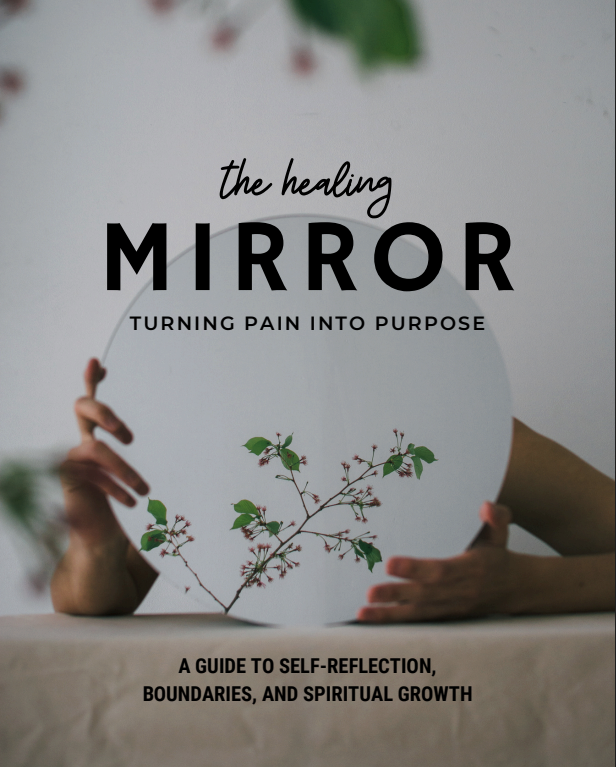
If you want to go deeper in identifying the lies and rewriting your family’s script, grab my free resource: The Healing Mirror eBook.
Click here to download the Healing Mirror
It will help you reflect on the stories you’ve believed, replace them with God’s truth, and begin the journey of walking in freedom.
Need help untangling the pattern?
If you recognize yourself or your marriage in this article and you are struggling to break the cycle on your own, I offer biblical counseling and faith-based coaching for individuals, couples, and families.
Sometimes we need a safe place to slow the cycle down, identify what is actually happening, and begin practicing a different response.
You can also explore the Happy Kid Toolkit and my free resources designed to help you identify unhealthy patterns, renew your thinking, communicate more clearly, set healthy boundaries, and move toward healing without shame.
You can find current counseling options, retreats, workshops, resources, and upcoming Happy Kid Toolkit trainings through The Happy Family Coach website.
And if this article helped you, send it to your spouse.
Not as ammunition.
As an invitation.
With hope and gratitude,
