

The Thousand Tiny Resentments That Kill Intimacy – Ep.129

How small disappointments become emotional distance—and what healthy repair actually looks like
Most marriages do not become disconnected because of one dramatic moment.
Sometimes they do.
There are betrayals and wounds that change a relationship immediately.
But often?
Distance grows much more quietly.
One sigh.
One eye roll.
One promise that never gets followed through on.
One dismissive response.
One more unfinished task.
One more financial conversation that becomes unnecessarily tense.
One more time you ask for help and immediately wish you hadn’t.
None of those moments seems significant enough on its own to say:
We have a marriage problem.
So we tell ourselves:
It’s fine.
I should let it go.
I don’t want to nag.
It isn’t worth fighting about.
I’ll just do it myself.
And sometimes letting something go really is the loving thing to do.
Marriage requires grace.
We are going to inconvenience each other.
Forget things.
Miscommunicate.
Have bad days.
Leave socks where socks apparently believe they belong.
We do not need a marriage summit every time somebody forgets to empty the dishwasher.
But there is a difference between letting something go and stuffing something down.
And when disappointment keeps getting stuffed rather than repaired, those tiny moments can begin turning into resentment.
Eventually, the issue is no longer the lightbulb.
Or the dishes.
Or the garage door opener.
Or the comment about money.
The issue becomes what those moments have started to represent.
Do you care about what matters to me?
Can I depend on you?
Am I a burden when I need something?
Are we actually partners?
And when those questions remain unanswered long enough, resentment begins creating distance.
Resentment Is Often Like a Pebble in Your Shoe
Imagine putting one tiny pebble in your shoe.
Annoying?
Yes.
Catastrophic?
Probably not.
So you keep walking.
Then another pebble gets in.
Then another.
You adjust the way you walk.
You compensate.
Eventually, your foot hurts.
Maybe you even develop a blister.
Now imagine someone looking at you limping and saying:
“Why are you making such a big deal about one little pebble?”
But that is no longer the whole story.
You have been walking on it for miles.
That is often what happens with resentment in marriage.
The current incident may genuinely be small.
But it is sitting on top of twenty similar incidents that were never fully addressed.
That is why one spouse may say:
“Why are you this upset?”
while the other is thinking:
“Because this is not just about today.”
The goal is not to justify exploding over little things.
The goal is to become curious about what the little thing is connected to.
The Event and the Meaning Are Not Always the Same Thing
This is one of the most useful distinctions couples can learn.
There is what happened.
And then there is what it meant to you.
Those are not always identical.
For example:
The event:
Your spouse sighs when you ask for help.
The meaning you experience:
My needs annoy you.
The event:
Your spouse looks at their phone while you are talking.
The meaning:
I am not important enough for your attention.
The event:
Something they promised to do gets delayed again.
The meaning:
I cannot depend on you.
The event:
A financial conversation becomes tense very quickly.
The meaning:
I have to brace myself every time money comes up.
Healthy couples eventually have to move beyond arguing only about the event.
Sometimes the other spouse genuinely did not intend the meaning you experienced.
That matters.
But your experience matters too.
A much better question than:
“Who is right?”
may be:
“What did that moment communicate to each of us?”
Resentment Is Often Grief Wearing Armor
We tend to think of resentment as anger.
And it certainly can contain anger.
But underneath resentment there is often something much more tender:
disappointment.
Loneliness.
Feeling unseen.
Feeling taken for granted.
Feeling foolish for hoping something would finally be different.
Feeling like you cannot depend on the person you most wanted to depend on.
Sometimes resentment says:
“I don’t need you anyway.”
But underneath may be:
“I needed you, and I got tired of being disappointed.”
That is a very different sentence.
And it matters because intimacy requires vulnerability.
It is hard to remain tender toward someone you are internally protecting yourself from.
That is one reason unresolved resentment eventually affects emotional and physical intimacy.
The body often begins guarding what the heart has stopped trusting.
Are You Letting It Go—or Keeping a Receipt?
First Corinthians 13 says that love keeps no record of wrongs.
That does not mean wisdom forgets patterns.
It does not mean harmful behavior should be ignored.
It does not mean forgiveness requires amnesia.
But there is a difference between:
remembering something because wisdom requires it
and
remembering something because you are building a prosecution case.
Sometimes we say:
“I forgave it.”
But internally, we kept the receipt.
Then another receipt.
Then another.
Eventually we have an entire filing cabinet.
And one day our spouse says something relatively minor and the whole cabinet falls over.
Suddenly we are arguing about something from six years ago while the other person is wondering how we got there.
That is usually a clue:
There is accumulation here.
Watch the Story You Attach to the Hurt
Imagine your spouse forgets something they agreed to do.
That is real.
You are allowed to be disappointed.
But notice how quickly the mind can move:
“They forgot.”
becomes:
“They always forget.”
which becomes:
“I have to do everything.”
which becomes:
“They only care about themselves.”
which becomes:
“I cannot depend on this person for anything.”
That is a very large journey from one missed responsibility.
Now, there may truly be a longstanding pattern that needs addressing.
But we still need to examine the story.
This is where taking our thoughts captive matters.
Not because we gaslight ourselves.
Biblical thought work is not:
“Everything is wonderful and I am not allowed to be upset.”
It is:
“What happened is real. My feelings are real. Now, Lord, help me distinguish fact from interpretation.”
Ask:
What do I know happened?
What am I assuming it means?
Is that interpretation completely true, partly true, or being intensified by accumulated hurt?
That is maturity.
Resentment and Overfunctioning Often Grow Together
This one is especially important for those of us who are highly capable.
Something is not getting done.
So we step in.
At first:
“I’ll help.”
Then:
“I’ll just handle it.”
Then:
“Apparently I have to do everything myself.”
Then:
“Why am I the only responsible person in this house?”
And suddenly we are furious about a system we may also be helping maintain.
That does not excuse another person’s lack of follow-through.
But overfunctioning can keep us stuck because we continually rescue the situation before responsibility has a chance to shift.
If you know my Happy Kid Toolkit framework, this is where I may recognize myself moving into:
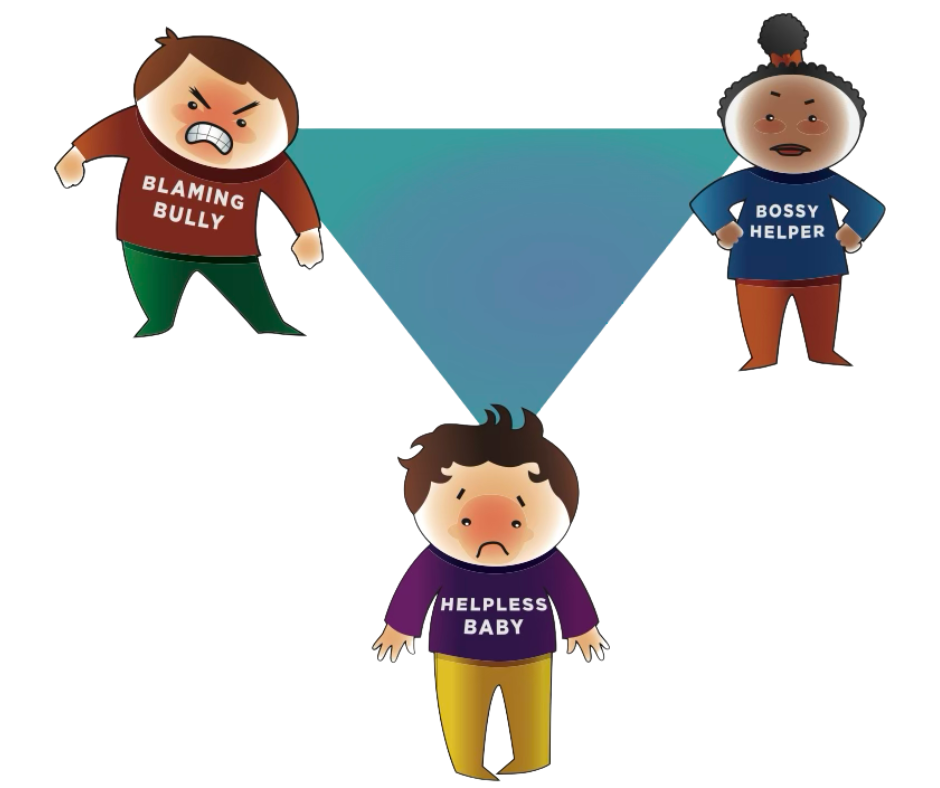
Bossy Helper:
“Fine. I’ll do everything.”
Then:
Blaming Bully:
“You never help me.”
And eventually:
Helpless Baby:
“Nothing is ever going to change.”

A healthier response might sound like:
Happy Kid:
“This matters to me, and I am disappointed that it wasn’t handled.”
Caring Friend:
“I can understand that you feel overwhelmed without making your overwhelm my responsibility.”
Respectful Leader:
“This needs to be completed. If you cannot handle it by Friday, I’m going to make another arrangement.”
No rescuing.
No attacking.
No martyrdom.
No six-month grudge.
Truth.
Responsibility.
Boundary.
Follow-through.
How Tiny Resentments Begin Affecting Intimacy
Resentment does not stay neatly contained inside one disagreement.
It begins changing how we experience the person.
1. Resentment reduces tenderness.
It is difficult to feel soft toward someone you are mentally prosecuting.
You may still love them.
But your body starts bracing.
2. Resentment changes affection.
A hug may stop feeling like affection and begin feeling like a request.
Physical closeness can start carrying emotional pressure.
3. Resentment reduces admiration.
You become excellent at noticing everything your spouse gets wrong.
Their flaws become enormous.
Their strengths become invisible.
That does not mean we pretend problems are not there.
But Philippians 4:8 reminds us to intentionally dwell on what is true, honorable, lovely, and commendable.
If I rehearse only what is wrong with my spouse, eventually I begin relating to them as though nothing is right with them.
And that probably is not true.
What Resentment Sounds Like
Sometimes resentment is obvious.
Other times it hides in everyday language:
“Fine.”
“Whatever.”
“Never mind.”
“I knew you were going to say that.”
“Of course you forgot.”
“I’ll just do it.”
“What’s the point?”
“You always…”
“You never…”
But resentment can also sound like nothing at all.
Sometimes it is silence.
You simply stop asking.
Stop explaining.
Stop hoping.
Stop bringing vulnerable things to your spouse.
The marriage may even look peaceful.
You coordinate schedules.
Attend events.
Handle bills.
Take family pictures.
Function beautifully.
But emotional disengagement is not the same thing as peace.
Sometimes people stop fighting because they stop believing anything will change.
That is resignation.
And resignation creates enormous distance.
Should I Let This Go—or Talk About It?
Not every irritation needs a confrontation.
So how do you know?
Try this simple test:
If you can genuinely release something without replaying it, changing your tone, withdrawing affection, punishing your spouse, or bringing it up later during unrelated conflicts, perhaps you can simply extend grace and let it go.
But if you notice yourself:
- replaying it repeatedly
- collecting additional evidence
- becoming sarcastic
- pulling away emotionally
- bringing it into unrelated arguments
- changing how you treat your spouse
- using it to justify contempt
You probably have not actually released it.
Something still needs attention.
That may mean forgiving.
It may mean examining your own interpretation.
And sometimes it means having an honest conversation.
Try This Two-Sentence Repair Starter
THE TWO-SENTENCE REPAIR STARTER
One of the simplest ways to talk about resentment without attacking your spouse is:
Sentence One:
“When ______ happened, I noticed I felt ______.”
Sentence Two:
“The story I started telling myself was ______. Can you help me understand what was happening for you?”
For example:
“When I asked for help and you sighed, I noticed that I felt burdensome. The story I started telling myself was, ‘My needs annoy you.’ Can you help me understand what was happening for you?”
Now your spouse has room to explain.
Perhaps they say:
“I was overwhelmed. I wasn’t trying to communicate that your needs annoy me.”
That matters.
But repair should not end there.
The other spouse may then ask:
“Can you understand why it landed that way?”
This is where empathy enters.
Two things can be true at once:
You did not intend to hurt me.
and
Your behavior still affected me.
Healthy repair makes room for both intent and impact.
Try the One-Brick-at-a-Time Exercise
THE ONE-BRICK-AT-A-TIME EXERCISE
If resentment has built a wall between you, please do not try to dismantle fifteen years of marriage in one conversation.
That usually results in emotional flooding and very little repair.
Instead, choose one brick.
One recurring issue.
Sit down together and take turns answering:
What happened?
What did I experience?
What story did I attach to it?
What do I wish you understood?
What is mine to own?
What would repair look like?
Then stop.
Do not say:
“And while we’re here…”
No.
One brick.
The wall did not go up in one day.
It may need to come down the same way.
Take a Resentment Audit
TAKE A RESENTMENT AUDIT
Set aside 15–20 quiet minutes and ask:
What am I currently resentful about?
Write everything down honestly.
Then take each item and ask four questions:
1. Is this something I need to release?
Maybe the offense truly is small and forgiveness means putting it down.
2. Is this something I need to communicate?
Perhaps your spouse does not even realize how something has affected you.
3. Does this require a boundary or practical system?
Sometimes another emotional conversation will not solve a recurring logistical problem. Maybe responsibilities need clear ownership. Maybe there needs to be an agreed deadline. Maybe the task needs to be delegated. Sometimes systems prevent resentment better than repeated arguments.
4. Is there something I need to repent of in my response?
This question matters. Perhaps the original hurt was legitimate. But then you became contemptuous. Or punishing. Or controlling.Or passive-aggressive. Or you gossiped. Or overfunctioned. Owning your response does not erase what happened to you. It simply keeps someone else’s behavior from determining who you become.
Biblical Forgiveness Is Not Pretending
Christian spouses sometimes become confused about forgiveness.
Forgiveness does not mean:
“This wasn’t important.”
“You are free to keep doing it.”
“I have to trust you immediately.”
“No boundary is allowed.”
“I’m not allowed to talk about it again.”
Forgiveness means we refuse to become the ultimate judge and collector of the debt.
We entrust justice to God.
But restored trust is built through trustworthy behavior.
Reconciliation requires participation.
And repentance should eventually bear fruit.
Ephesians 4:31–32 tells us to put away bitterness, anger, and slander and instead become kind, tenderhearted, and forgiving.
God does not simply tell us what to stop.
He shows us what should begin replacing it.
What If You Have Already Had This Conversation 100 Times?
Then another conversation may not be enough.
This is important.
If the pattern is:
hurt,
conversation,
apology,
tears,
hug,
repeat…
the problem may no longer be communication.
The issue may be lack of implementation.
At that point, repair may require:
- a concrete agreement
- clearly assigned responsibility
- measurable follow-through
- accountability
- a boundary
- counseling
- a change in the system
An apology can be sincere and still be incomplete.
Which is exactly where we are going next in this series.
Your Marriage Does Not Need to Be Perfect. It Needs to Be Repairable.
A healthy marriage is not one in which:
- nobody gets irritated,
- nobody forgets anything,
- nobody responds selfishly,
- nobody has a bad day,
- nobody hurts the other person.
You married a human being.
And unfortunately, they did too.
The goal is not perfection.
The question is:
Can we repair?
Can we recognize when something happened?
Can we own our part?
Can we hear the impact without immediately defending ourselves?
Can we apologize?
Can we change something concrete?
Can we forgive?
Can we put healthy boundaries around repeated patterns?
Can we find our way back toward one another?
That is hope.
Before You Ask for More Intimacy, Ask About the Resentment
If intimacy has become difficult in your marriage, do not assume the first solution is more romance.
Maybe there is nothing wrong with romance.
Maybe you absolutely need the date night.
But perhaps there is also resentment sitting underneath everything.
Ask:
Is there something between us that has never been repaired?
Maybe the first step toward intimacy is not creating more physical closeness.
Maybe it is saying:
“I miss you.”
“I am hurt.”
“I don’t want to keep doing this cycle.”
“I want to stop keeping score.”
“I want to understand you.”
“I want to feel like we are a team again.”
Sometimes those conversations are some of the most intimate conversations we can have.
A Prayerful Question to Carry This Week
Hebrews 12 warns us not to allow a root of bitterness to spring up and cause trouble.
Roots grow underground before anyone sees the fruit.
So ask the Lord:
Is there a root growing in me that I have ignored because the original hurt seemed too small?
Then pray:
Lord, show me what needs to be released, what needs to be addressed, what belongs to me to repent of, and what healthy repair would look like.
Not:
Lord, fix my spouse.
Search me first.
And then give me courage to tell the truth with both grace and wisdom.
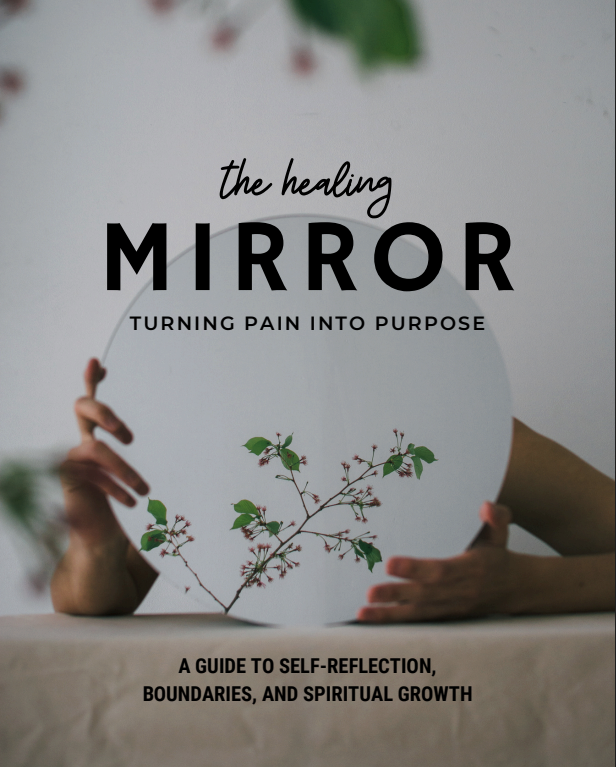
A Free Tool to Help You Begin
If you want to go deeper in identifying the lies and rewriting your family’s script, grab my free resource: The Healing Mirror eBook.
? Click here to download the Healing Mirror
It will help you reflect on the stories you’ve believed, replace them with God’s truth, and begin the journey of walking in freedom.
Listen to the When Love Isn’t the Problem Marriage Series
If this topic resonates with you, I encourage you to listen to the full When Love Isn’t the Problem marriage series on The Happy Family Coach Podcast.
This series was created to help couples look beneath the surface of intimacy struggles and understand what may actually be happening underneath the distance.
Because sometimes love isn’t the problem.
Sometimes resentment has accumulated.
Sometimes repair never happened.
Sometimes touch has started carrying pressure.
Sometimes one spouse is carrying too much while the other carries too little.
And sometimes everyday stress has slowly buried the friendship that brought you together in the first place.
These episodes are designed to build on one another as we move from identifying the brakes on intimacy toward rebuilding friendship, trust, connection, and healthy marital intimacy.
Episode 128: When Intimacy Starts to Feel Like a Chore
Part 1 of When Love Isn’t the Problem
What if the problem isn’t that the accelerator is broken—but that the brakes are on?
In Part 1, we explore how exhaustion, resentment, unresolved conflict, emotional disconnection, pressure, and everyday relational patterns can make intimacy feel harder even when two people still deeply love each other.
You’ll learn how to stop asking only, “Why don’t I want intimacy?” and begin asking the deeper question:
“What is happening between us that is making intimacy feel harder?”
Episode 129: The Thousand Tiny Resentments That Kill Intimacy
Part 2 of When Love Isn’t the Problem
Marriage rarely becomes distant because of one forgotten lightbulb, one irritated response, or one disappointing evening.
But small hurts that are never acknowledged or repaired can slowly accumulate into emotional distance.
In this episode, we explore how resentment develops, why the “little things” are often connected to something much deeper, how the stories we attach to disappointment affect our relationships, and how couples can begin dismantling resentment one brick at a time.
Episode 130: “I’m Sorry” Isn’t Repair
Part 3 of When Love Isn’t the Problem
What happens when the apology is sincere—but the same pattern keeps happening?
In Part 3, we unpack the important differences between apology, confession, repentance, forgiveness, reconciliation, trust, and genuine repair.
You’ll also learn the REPAIR framework for turning remorse into changed behavior, accountability, restitution where needed, and consistent new fruit over time.
Because:
An apology may end the argument. Repair changes the pattern.
Episode 131: When Touch Starts Feeling Like Pressure
Part 4 of When Love Isn’t the Problem
What happens when a hug stops feeling like just a hug?
In this episode, we explore the painful pursue-withdraw cycle that can develop when one spouse feels rejected while the other begins experiencing affection as pressure.
We talk about subtle expectations, emotional safety, boundaries, love languages, pressure-free affection, and how couples can begin creating new experiences where touch feels mutual, warm, playful, and free again.
Because sometimes rebuilding intimacy begins by allowing:
a hug to simply be a hug.
Episode 132: The Overfunctioning Spouse and the Resentful Marriage
Part 5 of When Love Isn’t the Problem
What happens when one spouse becomes the planner, fixer, reminder system, scheduler, emotional manager, and keeper of the invisible list?
In Part 5, we explore how helping can gradually become overfunctioning—and how overfunctioning can become control, exhaustion, and resentment.
We also go deeper into the biblical distinction between bearing one another’s burdens and carrying another adult’s responsibilities, while asking three important questions:
What is mine to carry?
What belongs to my spouse?
And what have I been trying to carry that belongs only to God?
Because maybe the opposite of overfunctioning isn’t simply doing less.
Maybe it’s trusting God more.
The Series Continues…
We’re not finished yet.
Coming next in When Love Isn’t the Problem:
Episode 133 — Vacation Marriage vs. Real-Life Marriage
Why can we laugh, flirt, adventure, and genuinely enjoy one another away from home—then return to schedules, bills, chores, kids, work, and stress and somehow lose each other again?
Episode 134 — Biblical Intimacy Without Obligation or Entitlement
A deeper look at what Scripture actually teaches about marital intimacy, mutuality, generosity, desire, self-control, and love—and what it does not give spouses permission to demand from one another.
Episode 135 — Finding Each Other Again: Rebuilding Friendship, Desire, and Intimacy
We’ll bring the entire series together and talk about rebuilding friendship, admiration, playfulness, trust, affection, and intimacy after distance has developed.
As each new episode releases, I’ll add its player here so you can listen to the entire series in order.
Need Help Breaking the Cycle?
If you recognize your marriage or your own patterns in this article and you feel stuck, you do not have to keep repeating the same argument for another ten years.
I offer biblical counseling and faith-based coaching for individuals, couples, and families who want to slow unhealthy cycles down, understand what is happening underneath them, and begin practicing healthier ways of relating.
You can also explore the Happy Kid Toolkit, along with my free resources, retreats, workshops, and upcoming trainings designed to help you recognize unhealthy patterns, renew your thinking, communicate more clearly, establish healthy boundaries, and move toward healing and restoration.
You can find all current ways to work with me through The Happy Family Coach.
And if you share this article or episode with your spouse, remember the rule for this entire series:
Invitation. Not ammunition.
With hope and gratitude,
