

The Overfunctioning Spouse and the Resentful Marriage – Ep.132

What’s Yours to Carry, What’s Theirs, and What Belongs to God
There is a particular kind of exhaustion that comes from feeling like everything depends on you.
You remember the appointments.
You know which bill is due.
You notice what is running low.
You remember the permission slip.
You schedule the dentist.
You keep track of the calendar.
You anticipate the problem before it happens.
You remind.
You follow up.
You fix.
You rescue.
You keep things moving.
And eventually, somewhere between competence and exhaustion, a thought begins to form:
Why do I have to do everything around here?
That is often where resentment begins.
Not necessarily because you are unloving.
Not because you are selfish.
Sometimes it begins because you have been carrying too much for too long.
But sometimes there is another layer too.
Sometimes we become so accustomed to being the capable one, the fixer, the planner, the problem-solver, that we start carrying things that were never actually ours to carry.
And then we resent other people for letting us carry them.
That is the tension we are exploring in Episode 132 of The Happy Family Coach Podcast, The Overfunctioning Spouse and the Resentful Marriage, Part 5 of the When Love Isn’t the Problem series.
But this conversation goes deeper than household chores and mental load.
It eventually brings us to a very humbling question:
What am I carrying that God never asked me to carry?
When Helping Starts Turning Into Overfunctioning
Overfunctioning often begins with something good.
Responsibility.
Competence.
Service.
Love.
A desire to help.
You see a need, so you meet it.
You notice something was forgotten, so you take care of it.
You see your spouse struggling, so you step in.
None of that is automatically unhealthy.
Marriage should include service.
We should care for one another.
There will be seasons where one spouse genuinely carries more because the other cannot.
Illness.
Grief.
Pregnancy.
Job loss.
Recovery from surgery.
A family crisis.
Exhaustion.
There are moments when love says:
“I’ve got this. You rest.”
That can be beautiful.
The problem begins when temporary support becomes a permanent system.
You stop helping your spouse carry a burden and start carrying their responsibilities for them.
You stop supporting and start managing.
You stop encouraging and start monitoring.
You stop asking and start taking over.
And sometimes, without meaning to, you become the parent in the relationship.
The Overfunctioner–Underfunctioner Dance
Overfunctioning and underfunctioning often feed one another.
The more one spouse does, the less the other person has to do.
The less the other person does, the more anxious the overfunctioner becomes.
The more anxious they become, the more they step in.
The more they step in, the less opportunity the other spouse has to take ownership.
Around and around the cycle goes.
Then one day the overfunctioning spouse explodes:
“I have to do everything around here!”
And sometimes the other spouse is thinking:
“You don’t let me do anything without correcting me.”
Now, that is not always the story.
Sometimes one spouse really has become passive, irresponsible, avoidant, or unwilling to carry their share.
That matters.
But sometimes both people are participating in the system.
One overfunctions.
One underfunctions.
And each person’s behavior reinforces the other’s.
That means changing the marriage may require more than one spouse simply “trying harder.”
It may require changing the system.
When Helping Becomes Control
This is where the Happy Kid Toolkit’s Bossy Helper can sneak in.
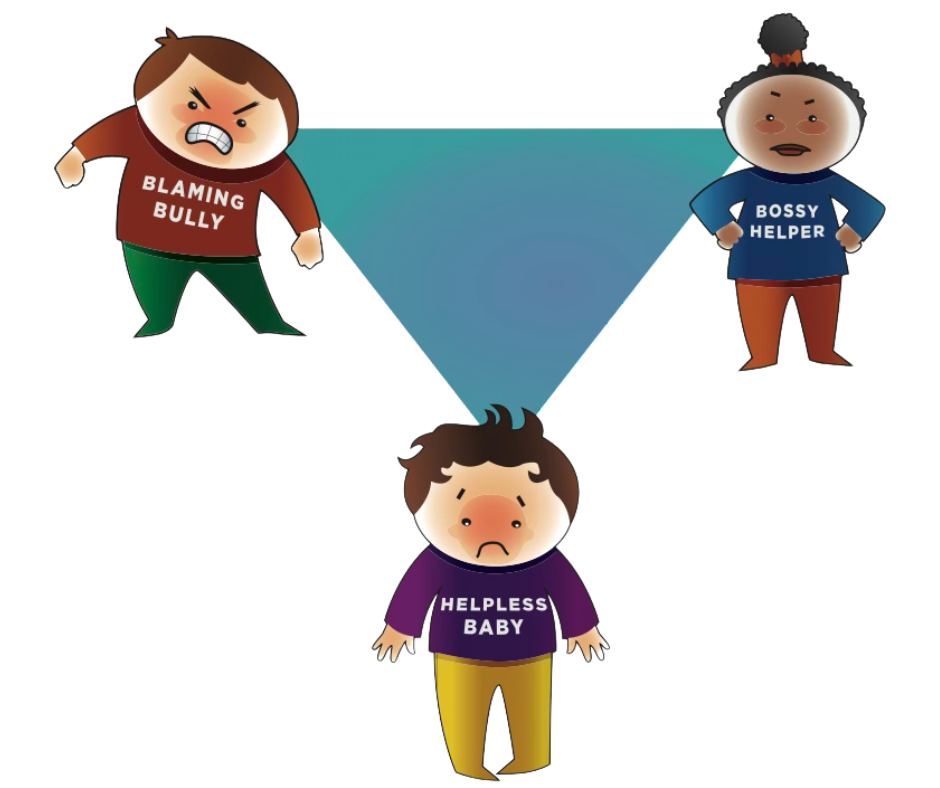
Bossy Helper usually does not wake up thinking:
I would really like to control everyone today.
Bossy Helper sounds much nicer than that.
“I’m just helping.”
“I’m just reminding.”
“I already took care of it.”
“I knew you’d forget.”
“It was easier if I just did it.”
“I’m trying to make things easier.”
And sometimes those statements are completely true.
But sometimes underneath them is:
fear,
anxiety,
impatience,
perfectionism,
distrust,
or a need to feel indispensable.
Sometimes helping is no longer about loving the other person.
Sometimes it becomes about controlling the outcome.
That is where a hard but helpful question can expose what is really happening:
Am I helping this person become more responsible, or am I helping them avoid responsibility?
Those are not the same thing.
Scripture Gives Us Both Sides
Galatians 6 gives us a beautiful tension.
Verse 2 says:
“Bear one another’s burdens.”
Then verse 5 says:
“Each will have to bear his own load.”
We need both.
Biblical love is not:
Every person for themselves.
But it is also not:
I will carry everything for you so that you never have to feel discomfort, responsibility, or consequences.
There are burdens we help one another carry.
And there are loads each adult must carry before God.
I can support my spouse.
I can encourage them.
I can serve them.
I can pray for them.
But I cannot repent for them.
I cannot obey for them.
I cannot grow spiritually for them.
I cannot keep rescuing them from every consequence and call that maturity.
Sometimes love steps in.
Sometimes love steps back.
Both can be loving.
The Hidden Contract of the Overfunctioning Spouse
Overfunctioners often carry an unspoken contract.
It might sound like:
If I do all of this, surely you’ll notice.
If I take care of everyone, eventually someone will take care of me.
If I make your life easier, eventually you’ll make mine easier.
If I keep everything running, surely you’ll appreciate me.
But the problem is that the other person may not even know the contract exists.
So the overfunctioner keeps giving.
The spouse keeps receiving.
And resentment grows.
Eventually:
“It’s fine. I’ll do it.”
does not actually mean:
It’s fine.
It means:
I am doing this, and I am angry that I have to do it.
That is where bitterness can quietly take root.
And that is why resentment is often grief wearing armor.
The deeper grief may be:
I do not feel partnered.
I do not feel seen.
I do not feel supported.
I feel like I am carrying life alone.
That grief deserves honesty.
But it also deserves self-examination.
Because sometimes resentment grows when we repeatedly volunteer for responsibilities we secretly believe someone else should be carrying.
And Then There Is God
This is where this topic became much more than marriage advice for me.
I have been studying the character of God, and one truth has been confronting me in a beautiful way:
God does not need me.
He needs no one.
He is completely self-sufficient.
Acts 17:24–25 says that God, who made the world and everything in it, is not served by human hands “as though he needed anything,” because He Himself gives life and breath and everything else.
God is not waiting for me to keep His plans on schedule.
He is not anxiously hoping I remember every detail.
He does not need my competence to remain sovereign.
He does not need my productivity to accomplish His purposes.
He does not need me to hold everything together.
And Colossians 1:17 says of Jesus:
“He is before all things, and in him all things hold together.”
Not in me.
Not in you.
Not in the overfunctioning spouse.
Jesus.
That truth can be incredibly freeing.
Because sometimes we say:
“I trust God.”
while living like:
“If I don’t fix this, everything will fall apart.”
Those two beliefs do not fit together very well.
You Are Not the Savior of Your Family
This may be one of the most important truths for an overfunctioner:
You are not the savior of your family.
And that is good news.
Your spouse already has access to a Savior.
Your children have a Savior.
Your family has a Savior.
His name is Jesus.
You cannot change another person’s heart.
You cannot manufacture repentance.
You cannot force maturity.
You cannot make another adult want God.
You cannot create humility in someone else.
You can speak truth.
You can pray.
You can encourage.
You can set boundaries.
You can allow consequences.
You can model repentance.
You can love.
But there are things only God can do.
John 16 reminds us that conviction belongs to the Holy Spirit.
That means you do not have to become the household Holy Spirit.
You do not need to constantly convict, prompt, remind, monitor, interpret motives, and manage another person’s spiritual growth.
You can faithfully speak truth and then leave room for God to work.
What If I Stop—and They Fail?
This is often the fear underneath overfunctioning.
What if I stop reminding and they forget?
What if I stop rescuing and there is a consequence?
What if I stop initiating every difficult conversation and nothing changes?
What if I step back and discover they really will not step up?
That is frightening.
Sometimes overfunctioning protects us from information we do not want to face.
If I fill every gap, I never have to find out whether you would fill it.
If I continually compensate for irresponsibility, I never have to face the reality of it.
If I rescue every time, I never know whether you would learn from the consequence.
Sometimes putting something down gives us information.
That information may be uncomfortable.
But truth is often the beginning of change.
Natural Consequences Are Not Cruel
This is one of the hardest areas for an overfunctioner.
The other person’s choices often affect you too.
If your spouse forgets something, you may also be inconvenienced.
If they fail to plan, you may also feel the consequence.
If they procrastinate, their urgency can become your emergency.
That is why rescuing feels easier in the moment.
You solve the problem.
But sometimes solving every problem prevents growth.
Galatians 6:7 reminds us that people reap what they sow.
That does not mean we become vindictive.
It does not mean:
“Good! I hope you suffer.”
It means we stop assuming that love requires preventing every consequence.
A helpful question is:
Am I protecting this person from harm, or am I protecting them from growth?
That requires wisdom.
A Word to the Underfunctioning Spouse
This conversation is not permission for the underfunctioning spouse to sit back and say:
“See? You need to stop nagging me.”
No.
If your spouse has had to become the manager because you consistently wait to be told what to do, that deserves examination.
If someone has to:
notice the task,
remember the task,
assign the task,
remind you about the task,
check whether it happened,
and follow up afterward,
you may have technically performed the task while they carried the mental load.
“Just tell me what you need me to do” can sound generous.
But sometimes it simply makes your spouse responsible for managing you too.
Healthy partnership requires initiative.
Ownership.
Awareness.
Follow-through.
Your spouse should not have to parent you.
Marriage is designed to be adult-to-adult partnership before God.
Ownership Means More Than Doing the Task
When responsibility is transferred, ownership should include the thinking.
For example, if one spouse owns the children’s dentist appointments, ownership does not mean:
“I will make the appointment after you text me or remind me.”
Nope.
Ownership means:
I know when the appointment is due.
I make it.
I place it on the calendar.
I handle the forms.
I communicate what needs to be communicated.
That is ownership.
A lot of marriages fight over chores when the deeper problem is management.
One person completes tasks.
The other still carries the entire mental system.
That is what needs to change.
“We’ll Try Harder” Is Not a System
If your marriage keeps having the same logistical conflict over and over again, good intentions may not be enough.
“We’ll try harder” is not a system.
Instead, clarify ownership.
Who is responsible?
What does ownership include?
When does it need to happen?
Does the other spouse agree to stop reminding once ownership is transferred?
Sometimes a marriage problem is partly a system problem.
Sometimes it is partly a character problem.
Wisdom means discerning the difference.
The Responsibility Audit
This is the practical exercise I want you to work through slowly.
Take one area of your marriage where you feel resentful.
Not everything.
One area.
Then ask yourself:
What am I carrying because it genuinely belongs to me?
What am I carrying because my spouse and I agreed that I would?
What am I carrying because I do not trust my spouse to do it?
What am I carrying because I am afraid of the consequence if I stop?
What am I carrying because being needed makes me feel valuable?
What am I carrying resentfully?
What responsibility does my spouse need the opportunity to fully own?
Pray through those questions.
Invite the Holy Spirit to show you where service has become control, where responsibility has become resentment, and where fear may be masquerading as faithfulness.
Mine. Theirs. God’s.
Now make three columns.
Mine to Carry
- My words.
- My attitude.
- My obedience.
- My commitments.
- My boundaries.
- My repentance.
- My choices.
- My responsibilities.
- My follow-through.
Theirs to Carry
- Their choices.
- Their emotions.
- Their commitments.
- Their consequences.
- Their spiritual growth.
- Their repentance.
- Their responsibilities.
- Their response to truth.
God’s to Carry
- Changing hearts.
- Conviction.
- Timing.
- Outcomes.
- The future.
- Another person’s transformation.
- Salvation.
- Things only a sovereign God can accomplish.
This can be humbling.
Because some of us have put things in the Mine column that belong in the God column.
And we are exhausted because we are attempting divine responsibilities with human strength.
Jesus Served Without Being Controlled by Everyone’s Needs
Jesus was the greatest servant who ever lived.
Philippians 2 shows us His humility.
He washed feet.
He fed people.
He healed.
He served.
He gave His life.
So the answer to overfunctioning is not:
Stop serving people.
That is not the way of Jesus.
But Jesus also did not obey every demand placed on Him.
In Mark 1, after a long period of ministry, Jesus withdrew to pray.
The disciples found Him and said:
“Everyone is looking for you.”
There were still needs.
Still people.
Still demands.
But Jesus was governed by the Father’s will, not by everyone else’s urgency.
That matters.
John 6:38 says:
“I have come down from heaven, not to do my own will but the will of him who sent me.”
Overfunctioners often ask:
What needs to be done?
A better question may be:
What has God actually given me to do?
Those are not always the same thing.
Serving Is Not the Same as Saving
Serving says:
How can I love you faithfully?
Saving says:
How can I make sure nothing uncomfortable ever happens to you?
Serving can support.
Saving takes over.
Serving respects adulthood.
Saving can accidentally erase responsibility.
Serving points someone toward Jesus.
Saving quietly begins positioning me as the person they cannot function without.
That is too much weight for any human being to carry.
Your spouse was never meant to be your god.
And you were never meant to be theirs.
Maybe the Opposite of Overfunctioning Is Not Doing Less
This may be the biggest takeaway from this entire conversation.
Maybe the opposite of overfunctioning is not simply doing less.
Maybe it is:
trusting God more.
You may still do a lot.
You may be naturally competent.
You may genuinely carry more in a particular season.
The issue is not simply the number of tasks.
The deeper questions are:
Am I serving from love or functioning from fear?
Am I obeying God or trying to control an outcome?
Am I helping or preventing someone from growing?
Am I giving freely or giving resentfully while keeping score?
Those are heart questions.
Where the Happy Kid Toolkit Shows Up
Overfunctioning can pull us into all three unhappy roles.
Bossy Helper says:
“I’ll handle it.”
“I knew you’d forget.”
“Just let me do it.”
“I’m only trying to help.”
Sometimes underneath that is:
I do not trust you to function without my management.
Blaming Bully says:
“I have to do everything.”
“You never help.”
“You are so irresponsible.”
“You’re basically another child.”
That can quickly become contempt.
Helpless Baby says:
“If I stop doing this, everything will fall apart.”
“No one takes care of me.”
“I guess I just have to do everything myself.”
Healthier responses look different.
Happy Kid can tolerate discomfort without catastrophizing.
Caring Friend can support without taking over.
Respectful Leader can clearly communicate responsibility, follow through on their own commitments, and allow others to own theirs.
That is healthy adulthood.
And it is discipleship.
Marriage Is Supposed to Point Beyond Itself
Ephesians 5 gives marriage a much bigger purpose than household efficiency.
Paul writes:
“The two shall become one flesh.”
Then he says:
“This mystery is profound, and I am saying that it refers to Christ and the church.”
Marriage is not ultimate.
Jesus is.
Your spouse is not ultimate.
Jesus is.
Even your marriage is meant to point beyond itself.
Our marriages can become a megaphone for God’s character:
His covenant faithfulness.
His truth.
His mercy.
His patience.
His holiness.
His forgiveness.
His sacrificial love.
That means the ultimate goal is not:
How do I make my spouse carry exactly what I think they should carry?
The bigger question is:
How do I glorify God in the way I serve, speak truth, establish boundaries, repent, forgive, and trust Him inside this marriage?
That shifts the center.
God Does Not Need You—but He Delights to Use You
When we say God does not need us, we are not saying we do not matter.
Those are completely different statements.
God does not need us because He is complete.
And yet He loves us.
Chooses us.
Adopts us.
Gives us gifts.
Invites us into His purposes.
Allows us to participate in what He is doing.
That means I do not have to be the hero.
I get to be faithful.
Sometimes faithfulness means serving.
Sometimes it means waiting.
Sometimes it means speaking.
Sometimes it means praying.
Sometimes it means stepping back.
Sometimes it means letting another adult carry what God has entrusted to them.
A Conversation You Can Have With Your Spouse
If you recognize this pattern, try saying:
“I think we have gotten into a dynamic where I carry too much and then become resentful. I also realize there are times when I step in before you have the opportunity to fully own something. I do not want us to keep functioning this way.”
Then ask:
“Can we look at our responsibilities and clearly decide what each of us owns?”
The underfunctioning spouse may need to say:
“I can see that I have relied on you to notice, remember, remind, and follow up. I want to grow in taking initiative and fully owning what belongs to me.”
That conversation sounds very different than:
“You never help.”
and:
“You’re always nagging.”
Same issue.
Different posture.
Start With One Thing
Do not try to restructure your entire marriage by Friday.
Choose one area where resentment is building.
Ask:
What belongs to me?
What belongs to my spouse?
What belongs to God?
Then make one concrete change.
Maybe you stop reminding.
Maybe you transfer full ownership of a responsibility.
Maybe you make a direct request instead of silently hoping your spouse notices.
Maybe you allow a reasonable consequence.
Maybe you repent for controlling.
Maybe you take responsibility for something you have been avoiding.
Maybe you seek counseling because this pattern is too entrenched to untangle alone.
One small act of obedience can begin changing the system.
Listen to the When Love Isn’t the Problem Marriage Series
If this topic resonates with you, I encourage you to listen to the full When Love Isn’t the Problem marriage series on The Happy Family Coach Podcast.
This series was created to help couples look beneath the surface of intimacy struggles and understand what may actually be happening underneath the distance.
Because sometimes love isn’t the problem.
Sometimes resentment has accumulated.
Sometimes repair never happened.
Sometimes touch has started carrying pressure.
Sometimes one spouse is carrying too much while the other carries too little.
And sometimes everyday stress has slowly buried the friendship that brought you together in the first place.
These episodes are designed to build on one another as we move from identifying the brakes on intimacy toward rebuilding friendship, trust, connection, and healthy marital intimacy.
Episode 128: When Intimacy Starts to Feel Like a Chore
Part 1 of When Love Isn’t the Problem
What if the problem isn’t that the accelerator is broken—but that the brakes are on?
In Part 1, we explore how exhaustion, resentment, unresolved conflict, emotional disconnection, pressure, and everyday relational patterns can make intimacy feel harder even when two people still deeply love each other.
You’ll learn how to stop asking only, “Why don’t I want intimacy?” and begin asking the deeper question:
“What is happening between us that is making intimacy feel harder?”
Episode 129: The Thousand Tiny Resentments That Kill Intimacy
Part 2 of When Love Isn’t the Problem
Marriage rarely becomes distant because of one forgotten lightbulb, one irritated response, or one disappointing evening.
But small hurts that are never acknowledged or repaired can slowly accumulate into emotional distance.
In this episode, we explore how resentment develops, why the “little things” are often connected to something much deeper, how the stories we attach to disappointment affect our relationships, and how couples can begin dismantling resentment one brick at a time.
Episode 130: “I’m Sorry” Isn’t Repair
Part 3 of When Love Isn’t the Problem
What happens when the apology is sincere—but the same pattern keeps happening?
In Part 3, we unpack the important differences between apology, confession, repentance, forgiveness, reconciliation, trust, and genuine repair.
You’ll also learn the REPAIR framework for turning remorse into changed behavior, accountability, restitution where needed, and consistent new fruit over time.
Because:
An apology may end the argument. Repair changes the pattern.
Episode 131: When Touch Starts Feeling Like Pressure
Part 4 of When Love Isn’t the Problem
What happens when a hug stops feeling like just a hug?
In this episode, we explore the painful pursue-withdraw cycle that can develop when one spouse feels rejected while the other begins experiencing affection as pressure.
We talk about subtle expectations, emotional safety, boundaries, love languages, pressure-free affection, and how couples can begin creating new experiences where touch feels mutual, warm, playful, and free again.
Because sometimes rebuilding intimacy begins by allowing:
a hug to simply be a hug.
Episode 132: The Overfunctioning Spouse and the Resentful Marriage
Part 5 of When Love Isn’t the Problem
What happens when one spouse becomes the planner, fixer, reminder system, scheduler, emotional manager, and keeper of the invisible list?
In Part 5, we explore how helping can gradually become overfunctioning—and how overfunctioning can become control, exhaustion, and resentment.
We also go deeper into the biblical distinction between bearing one another’s burdens and carrying another adult’s responsibilities, while asking three important questions:
What is mine to carry?
What belongs to my spouse?
And what have I been trying to carry that belongs only to God?
Because maybe the opposite of overfunctioning isn’t simply doing less.
Maybe it’s trusting God more.
The Series Continues…
We’re not finished yet.
Coming next in When Love Isn’t the Problem:
Episode 133 — Vacation Marriage vs. Real-Life Marriage
Why can we laugh, flirt, adventure, and genuinely enjoy one another away from home—then return to schedules, bills, chores, kids, work, and stress and somehow lose each other again?
Episode 134 — Biblical Intimacy Without Obligation or Entitlement
A deeper look at what Scripture actually teaches about marital intimacy, mutuality, generosity, desire, self-control, and love—and what it does not give spouses permission to demand from one another.
Episode 135 — Finding Each Other Again: Rebuilding Friendship, Desire, and Intimacy
We’ll bring the entire series together and talk about rebuilding friendship, admiration, playfulness, trust, affection, and intimacy after distance has developed.
As each new episode releases, I’ll add its player here so you can listen to the entire series in order.
Need Help Untangling the Pattern?
If you and your spouse recognize yourselves in this dynamic and cannot seem to get out of it, you may need more than another chore chart.
I offer biblical counseling and faith-based coaching for individuals, couples, teens, and families who want help identifying unhealthy relational patterns, taking responsibility for what belongs to them, establishing healthier boundaries, repairing conflict, and growing in Christ.
You can learn more through The Happy Family Coach website.
The Happy Kid Toolkit
The Happy Kid Toolkit helps individuals and families recognize the roles they step into when they feel anxious, hurt, rejected, overwhelmed, or out of control.
Bossy Helper.
Blaming Bully.
Helpless Baby.
And then teaches healthier ways to respond through Happy Kid, Caring Friend, and Respectful Leader.
My upcoming Happy Kid Toolkit online training course will go much deeper into these patterns and help individuals, couples, parents, and families recognize the beliefs and stories driving their reactions, renew their thinking with biblical truth, and practice healthier responses.
Stay connected through the podcast, website, and email list for upcoming details.
Created on Purpose — Mallorca, Spain
And for the women who are craving intentional space to slow down, reconnect with God, rest, laugh, explore, worship, and ask what He may be inviting you into next, I would love for you to explore:
Created on Purpose — Mallorca, Spain
May 16–22, 2027
This Christ-centered women’s retreat is designed around rest, friendship, worship, reflection, adventure, purpose, and space to hear from God away from the noise of everyday life.
Current retreat information and registration details are available through The Happy Family Coach website.
With hope and gratitude,
