

It’s Not Too Late: How Parents Can Repair Broken Relationships with Their Children

I took this photo right before leaving my daughter Reese at college her first year.
We stood there in her dorm room doorway hugging a little longer than usual, both of us knowing something had shifted. One season of parenting had ended, and another had begun.
Moments like that have a way of making you reflect. You start replaying years in your mind — the things you’re grateful for, the things you wish you had done differently, the conversations you wish you could revisit.
Parenting has a way of humbling us like that.
Sometimes the most painful realization in parenting comes years later.
Your children are older now.
Maybe they’re teenagers.
Maybe they’re young adults.
Maybe they’ve already moved out and are building lives of their own.
And somewhere along the way, you’ve begun to see things more clearly.
You realize there were seasons when you were overwhelmed.
Times when you reacted harshly.
Moments when you were emotionally unavailable.
Maybe you were carrying trauma of your own.
Maybe your marriage was struggling.
Maybe you were surviving anxiety, addiction, or chaos in your own life.
And now you’re wondering something many parents quietly carry:
Did I miss my chance?
Did I damage something that can never be repaired?
If that’s the question sitting in your heart today, I want to begin with a truth that runs throughout the entire story of Scripture:
God is a restorer.
The Heart of God Is Restoration
The Bible is full of stories where God restores what seemed broken beyond repair.
He restores marriages.
He restores faith.
He restores entire nations.
And sometimes, He restores families.
In Joel 2:25, God gives this promise:
“I will restore to you the years that the locusts have eaten.”
God doesn’t pretend the years didn’t happen.
He redeems what comes next.
The Gospel itself is a story of restoration. Humanity was separated from God through sin, yet God moved toward us in love through Jesus Christ to bring reconciliation.
Romans 5:8 says:
“But God demonstrates His own love for us in this: While we were still sinners, Christ died for us.”
If God specializes in restoring broken relationships with sinners like us, then it should not surprise us that He also cares deeply about restoring families.
Why Attachment Matters
Children are designed by God to form deep emotional bonds with their caregivers.
Psychologists call this attachment, but at its core it simply describes a child’s need for safety, comfort, and connection.
Every child asks the same internal question:
“When I’m distressed, who comes for me?”
When children consistently experience comfort, presence, and repair after conflict, they develop a sense of security.
But many families struggle with this.
Parents may have grown up in homes where emotions weren’t safe.
Where anger, criticism, neglect, or chaos were normal.
And without realizing it, we sometimes repeat patterns we experienced ourselves.
But recognizing that reality is not the end of the story.
Sometimes it is the beginning of healing.
When Parents Realize They Didn’t Do This Well
One of the most humbling moments in adulthood is when parents begin to see their past parenting through a new lens.
You might think:
- “I wish I had understood emotional needs back then.”
- “I wish I had been calmer.”
- “I wish I had listened more.”
Those realizations can bring deep regret.
But regret does not have to lead to shame.
In God’s hands, regret can become repentance, and repentance opens the door to healing.
Moving Off the Unhappy Kid Triangle
In the Happy Kid Toolkit, I teach families about the Unhappy Kid Triangle (UHKT).
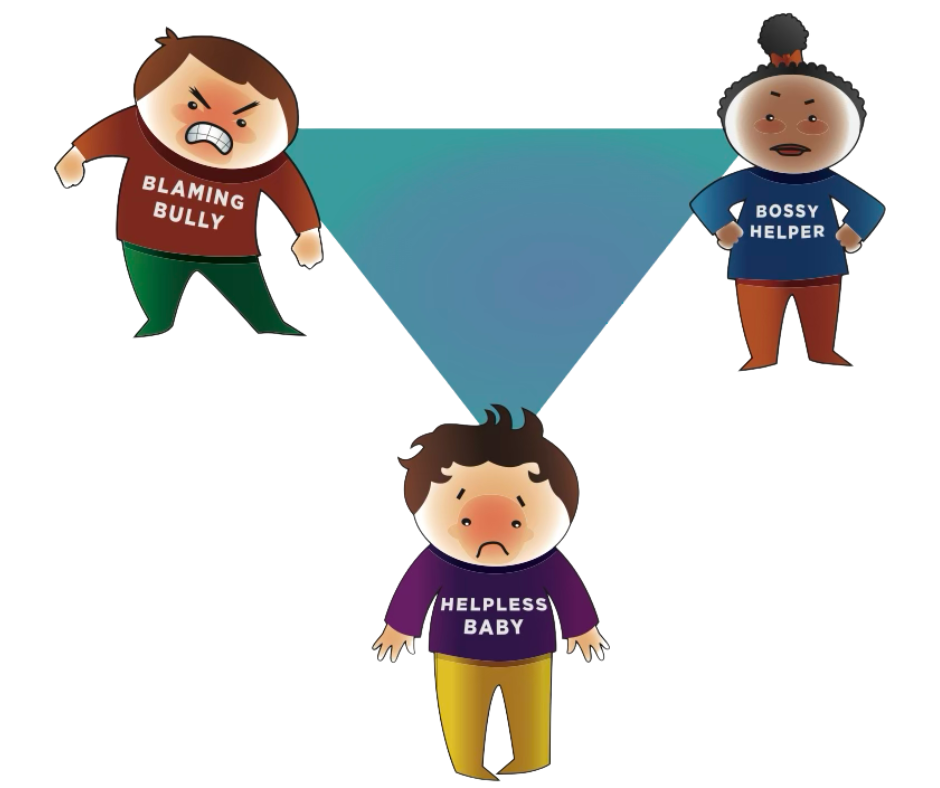
Most people know these roles in children:
- Helpless Baby
- Bossy Helper
- Blaming Bully
But parents can live there too.
When we feel regret, we may slip into Helpless Baby thinking:
- “I ruined everything.”
- “It’s too late now.”
- “There’s nothing I can do.”
Or we may move into Blaming Bully, saying things like:
- “They’re just ungrateful.”
- “They should appreciate what I did for them.”
Or sometimes we remain stuck in Bossy Helper, trying to fix, control, lecture, or force reconciliation.
Healing begins when we step off that triangle and move toward humility and responsibility.
The Power of Confession
One of the most powerful gifts a parent can give their child—at any age—is honest ownership.
James 5:16 says:
“Confess your sins to one another and pray for one another, that you may be healed.”
Confession is not about self-condemnation.
It’s about truth and humility.
Many adult children have never heard their parents say something like:
- “I was wrong.”
- “I see things now that I couldn’t see then.”
- “I’m sorry.”
But those words can open doors that years of silence have kept closed.
What a Repair Conversation Can Look Like
Repair doesn’t require a perfect speech.
It requires humility.
A conversation might sound something like this:
“I’ve been reflecting on my parenting over the years, and I realize there were times when I wasn’t emotionally present the way you needed me to be.
Sometimes I reacted harshly or didn’t listen well.
I can see now how that may have hurt you, and I’m truly sorry.
I’m growing and asking God to change my heart, and I would love the chance to build something healthier moving forward.”
Notice what is not included:
- No defensiveness.
- No justifying the past.
- No pressure for immediate forgiveness.
Just humility.
And humility is powerful.
Repair Does Not Mean Immediate Reconciliation
Sometimes parents fear having these conversations because they worry their child might reject them.
That fear is understandable.
Repair does not guarantee immediate reconciliation.
Sometimes children need time.
Sometimes they need space to process their own wounds.
Romans 12:18 reminds us:
“If it is possible, as far as it depends on you, live at peace with everyone.”
That phrase matters:
As far as it depends on you.
You cannot control someone else’s response.
But you can control your posture.
You can choose humility.
You can choose truth.
You can choose growth.
The Posture of the Prodigal Father
One of the most powerful pictures of restoration in Scripture is found in Luke 15, the parable of the prodigal son.
The father allows the son to leave.
He does not chase him down or force him to return.
But he remains ready.
Waiting.
Watching.
And when the son finally comes home, Scripture says the father runs toward him.
Arms open.
Heart open.
Ready to restore the relationship.
This is the posture of a healing parent.
Not controlling.
Not demanding.
But ready to receive their child with love whenever reconciliation becomes possible.
God Can Redeem Your Story
Many parents carry quiet shame about mistakes they made in earlier seasons of life.
But shame is not from God.
Conviction leads to repentance.
Repentance leads to healing.
And healing can ripple through generations.
I have seen parents approach their adult children with humility and honesty, and those conversations often become the beginning of deeper relationships than they ever had before.
Not perfect relationships.
But honest ones.
Grace-filled ones.
Redemptive ones.
Reflection Questions
If you are a parent longing for restoration, take some time to prayerfully reflect on these questions:
- Is there something I need to acknowledge or apologize for with one of my children?
- Am I willing to approach that conversation with humility rather than defensiveness?
- What fears keep me from pursuing repair?
What would it look like to surrender this relationship to God while remaining open and available?
Your Story Is Not Over
If you feel regret today, remember this:
Your story is not finished.
God is still writing it.
The same God who restores broken hearts and reconciles sinners to Himself is also capable of healing families.
Sometimes the most powerful chapter in a parent’s story is not the beginning.
It’s the chapter where they finally say:
“God, change me first.”
And when a parent walks in humility, repentance, and love, something beautiful often begins to grow again.
Even years later.
Continue the Conversation: Listen to the Companion Podcast Episode
If this message resonated with your heart, I invite you to listen to the companion podcast episode where I explore this topic more deeply.
In Episode 102 of The Happy Family Coach Podcast, we talk about attachment through both a psychological and biblical lens — what children truly need emotionally, how those needs shape their core beliefs, and how the Gospel provides a path for healing even when we realize we didn’t get everything right as parents.
We also walk through practical ways to move off the Unhappy Kid Triangle and into humility, repair, and relational restoration.
If you’ve ever wondered:
- Did I miss my chance with my child?
- Is it too late to repair our relationship?
- What does real reconciliation actually look like?
This episode will encourage you and remind you that God is always able to redeem what feels broken.
A Space for Deeper Healing
If you’re longing for deeper personal healing in your own story — especially around family relationships, childhood wounds, or generational patterns — I would love to invite you to join me at one of my Renew & Restore Women’s Healing Retreats.
These retreats are designed to be a safe, faith-centered space where women can slow down, reflect, process their stories, and invite God into places that may still need healing.
Together we explore themes like:
- understanding how past wounds shape present relationships
- renewing our minds with biblical truth
- moving off unhealthy relational patterns
- and experiencing the freedom that comes through surrender and restoration in Christ.
New retreat dates are announced throughout the year, including upcoming gatherings in Joshua Tree, California, and other beautiful locations designed for rest and reflection.
If you’d like to learn more about upcoming retreats and opportunities to join us, you can explore details right here on my website. Click here to go directly to my events page…
Because healing often begins when we step away from the noise of everyday life and make space for God to do what only He can do.
With love and gratitude,
