

When the Wicked Seem to Win: Holding Faith in the Face of Injustice
A Psalm 73 Reflection for the Wounded and Weary
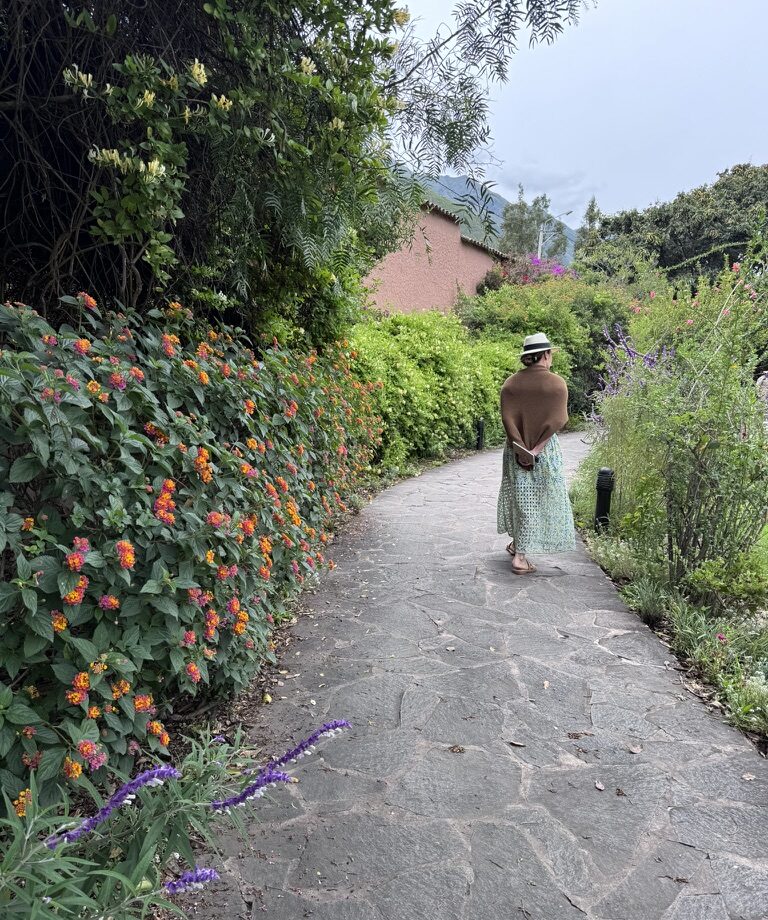
This photo was taken in the Sacred Valley of Peru, on a quiet stone path that curved gently out of sight.
It was early morning. The air was cool. Everything around me felt alive—green, grounded, steady. And yet, as I walked that path, I remember carrying questions that hadn’t gone away just because I was somewhere beautiful.
Not loud questions. Not dramatic ones.
The quieter kind that sit in your chest and follow you wherever you go.
Questions about fairness.
About accountability.
About why some people seem to walk away untouched—while others are left holding the weight of what happened.
I wasn’t angry in that moment. I wasn’t searching for answers. I was simply walking. One step at a time. Not rushing. Not turning back. Just staying present on the path in front of me.
That’s what this photo holds for me now.
It reminds me that faith doesn’t always look like confidence or clarity. Sometimes it looks like choosing not to harden. Like continuing to move forward when justice feels delayed. Like staying near God without needing Him to explain Himself.
Psalm 73 was written from that same place.
It opens with confidence—but quickly reveals a faithful heart in conflict. Someone who believes in God, yet can’t make sense of what he’s seeing. Someone watching the wicked prosper and wondering how that fits with everything he’s been taught.
The psalm doesn’t rush past that tension. It lets it breathe. And then, slowly, it leads us somewhere deeper—not into quick answers, but into God’s presence.
And that’s where reorientation begins.
There are seasons when faith doesn’t feel fragile because of doubt—but because of what we see.
We watch people who caused real harm continue on untouched.
They still have influence.
They still have comfort.
They still have resources, vacations, renovations, and applause.
And meanwhile, the ones who were wounded are left carrying the cost.
If you’ve ever found yourself quietly wondering, “God… how is this okay?”
Psalm 73 was written for you.
The Pain We Don’t Like to Admit
Psalm 73 opens with a confident statement:
“Surely God is good to Israel, to those who are pure in heart.”
But immediately after, the psalmist—Asaph—confesses something deeply human:
“But as for me, my feet had almost slipped.”
Why?
“For I envied the arrogant when I saw the prosperity of the wicked.”
This isn’t shallow jealousy.
This is moral anguish.
It’s the pain of watching injustice persist while faithfulness feels costly.
It’s the grief of seeing people who wounded others continue on as if nothing happened.
It’s the confusion that comes when obedience doesn’t seem to “pay off.”
Psalm 73 does not shame this pain.
It names it.
When Comparison Warps the Story
Asaph does what many of us do in seasons of injustice:
he begins to watch.
He observes their ease, their confidence, their comfort.
And slowly, comparison begins to distort reality.
Faithfulness starts to feel foolish.
Integrity starts to feel expensive.
Suffering starts to feel like proof that something went wrong.
Asaph finally voices the thought many believers are afraid to say out loud:
“Surely in vain I have kept my heart pure.”
This is not rebellion.
It’s exhaustion.
And Scripture does not rush past it.
The Turning Point: Entering God’s Presence
Then comes the verse that changes everything:
“Until I entered the sanctuary of God; then I discerned their end.” (Psalm 73)
Notice what does not happen here.
God does not explain Himself.
God does not immediately punish the wicked.
God does not fix the injustice in real time.
What changes is where Asaph stands.
The sanctuary is not escape—it is reorientation.
In God’s presence, Asaph is given a wider lens.
Time is reintroduced into the story.
Eternity comes back into view.
Injustice always looks bigger when we stare at it without God steadying our vision.
The Hard Truth About Delayed Justice
Psalm 73 is honest about something we don’t like to accept:
God does not always act on our timeline.
The wicked are not immediately exposed.
The faithful are not immediately rewarded.
And that delay can feel unbearable—especially when the harm was real.
But Scripture reminds us of something essential:
Delay is not denial.
And visible prosperity is not proof of God’s approval.
What looks like thriving may actually be restraint, patience, or mercy—not blessing.
God’s silence is not indifference.
When Pain Turns Inward
Asaph does something brave next.
He turns the lens inward—not to shame himself, but to tell the truth:
“When my heart was grieved and my spirit embittered,
I was senseless and ignorant.”
This isn’t self-loathing.
It’s clarity.
He recognizes what bitterness was doing to his soul.
Because unresolved injustice doesn’t just threaten our peace—it threatens our becoming.
Psalm 73 invites us to bring that danger into the light before it reshapes us.
The Anchor That Holds
Then Asaph lands somewhere quieter—and far stronger:
“Yet I am always with You;
You hold me by my right hand.”
The injustice hasn’t disappeared.
But God has not left.
And then comes the declaration that anchors the entire psalm:
“Whom have I in heaven but You?
And earth has nothing I desire besides You.”
This is not denial of pain.
It is devotion refined by suffering.
God Himself—not vindication, not answers, not outcomes—becomes the good.
Why This Matters for Healing
Psalm 73 protects wounded believers from two dangerous paths:
1. Cynicism – concluding that righteousness is pointless
2. Hardness – allowing bitterness to calcify the heart
Instead, it offers a third way:
– honesty without attack
– grief without collapse
– trust without denial
It shows us that nearness to God is often the truest form of justice we receive in the waiting.
A Word for Those Who Are Still Waiting
If you are watching people who harmed you appear to thrive…
If you are carrying unanswered questions…
If you are tired of doing “the right thing” without visible reward…
You are not foolish for noticing.
You are not unfaithful for grieving.
And you are not alone in the tension.
Psalm 73 does not promise quick resolution.
It promises something quieter—and stronger:
God will not leave you while you wait.
And sometimes, His nearness is what keeps us whole until justice finally comes.
Reflection Questions
You may want to sit with these gently this week:
- How might God be protecting my heart—even while justice feels delayed?
- Where has comparison quietly reshaped my faith?
- What injustice am I still carrying internally?
- What changes when I bring that pain into God’s presence instead of carrying it alone?
Final Word
If this reflection resonated with you, I invite you to stay with it a little longer.
You can listen to the full podcast episode on Psalm 73 using the player just below, where we walk through this passage slowly and honestly together. You might also consider sharing this post or episode with someone who is quietly carrying injustice and needs to know they’re not alone.
Or perhaps the most faithful next step is simply to return to Psalm 73—again and again—and allow God to meet you there, not with quick answers, but with His steady presence.
Grace and peace to you—especially in the waiting,
